
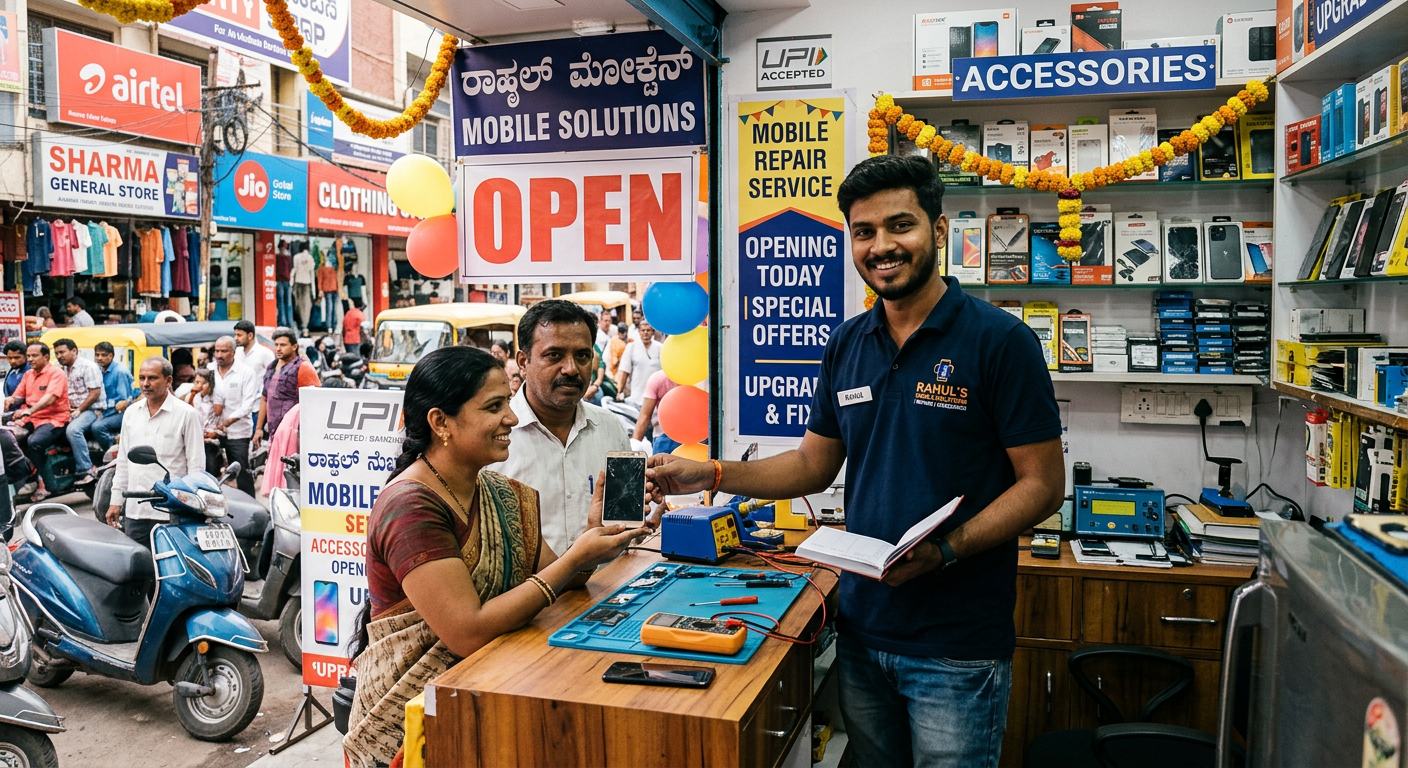
Starting a mobile repair shop can be an attractive opportunity for people with technical skills and an interest in electronics. However, opening a shop without proper planning can make it difficult to control expenses, attract customers, and build consistent revenue.
A well-prepared Mobile Repair Business Plan gives you a clear roadmap. It helps you understand your target customers, estimate investment, choose services, plan equipment purchases, set prices, and develop a marketing strategy.
You do not need a complicated corporate document. A practical business plan should simply answer one important question:
How will your mobile repair business operate, attract customers, manage costs, and grow?
This guide explains the important sections you should include.
- What Is a Mobile Repair Business Plan?
- Why You Need a Business Plan
- Decide Your Mobile Repair Business Model
- Identify Your Target Customers
- Choose Your Repair Services
- Estimate Your Initial Investment
- Plan Your Mobile Repair Shop Equipment
- Choose the Right Location
- Create Your Pricing Strategy
- Plan Your Daily Operations
- Build a Mobile Repair Shop Marketing Strategy
- Calculate Revenue and Profit
- Plan for Business Growth
- Common Mistakes to Avoid
- Training Before Starting Your Business
- Why Choose Screen Fixer Institute?
- Suggested Articles Links
- Trusted Industry Resources
- Frequently Asked Questions
- Start Your Mobile Repair Career with Screen Fixer Institute
- Conclusion
What Is a Mobile Repair Business Plan?
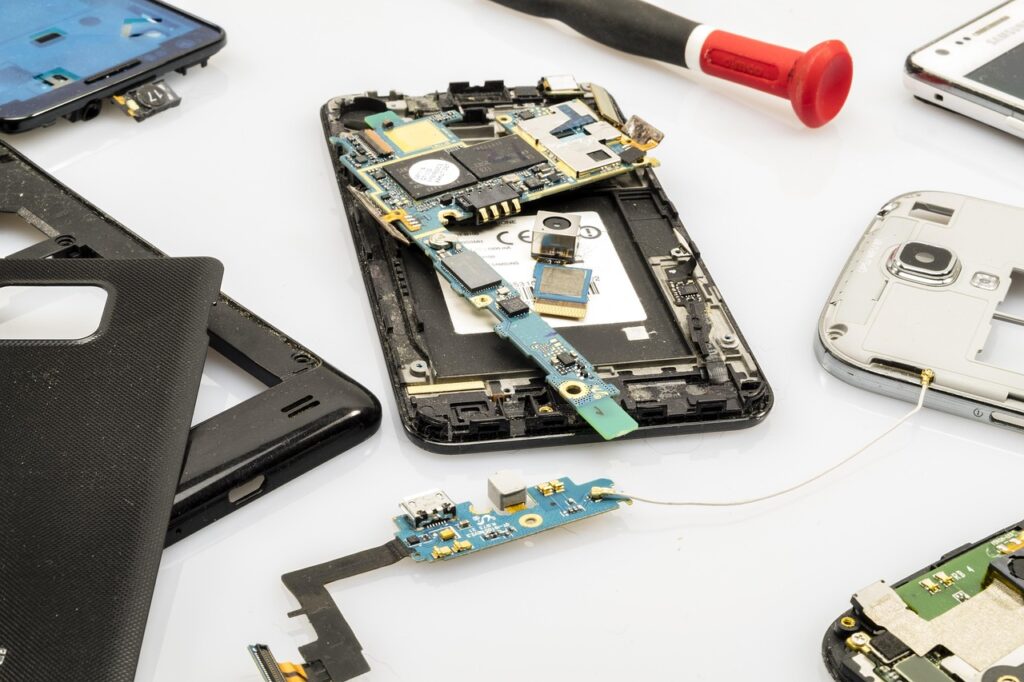
A Mobile Repair Business Plan is a practical document that explains how you intend to start, operate, and grow your mobile repair business.
It can include:
- Business objectives
- Target customers
- Repair services
- Equipment requirements
- Initial investment
- Monthly expenses
- Pricing
- Marketing strategy
- Revenue expectations
- Growth plans
The plan does not need to predict the future perfectly. Instead, it helps you make better decisions before spending money.
Why You Need a Business Plan
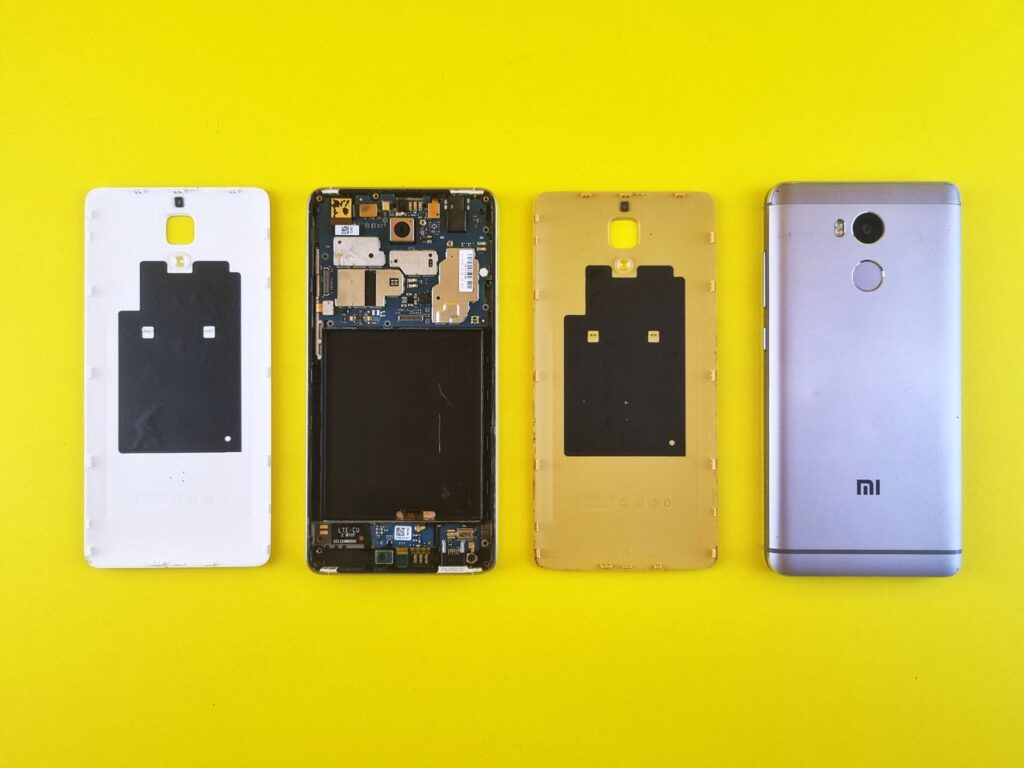
Many new entrepreneurs focus on buying machines and renting a shop. However, equipment is only one part of the business.
A proper plan helps you think about the complete operation.
For example, before opening your shop, you should know:
- Which repairs will you offer?
- Who are your customers?
- How much can you invest?
- What equipment is essential?
- How will customers find you?
- What will your monthly expenses be?
- How will you manage spare parts?
- Which services can you add later?
Answering these questions reduces uncertainty and gives your business a clearer direction.
Decide Your Mobile Repair Business Model
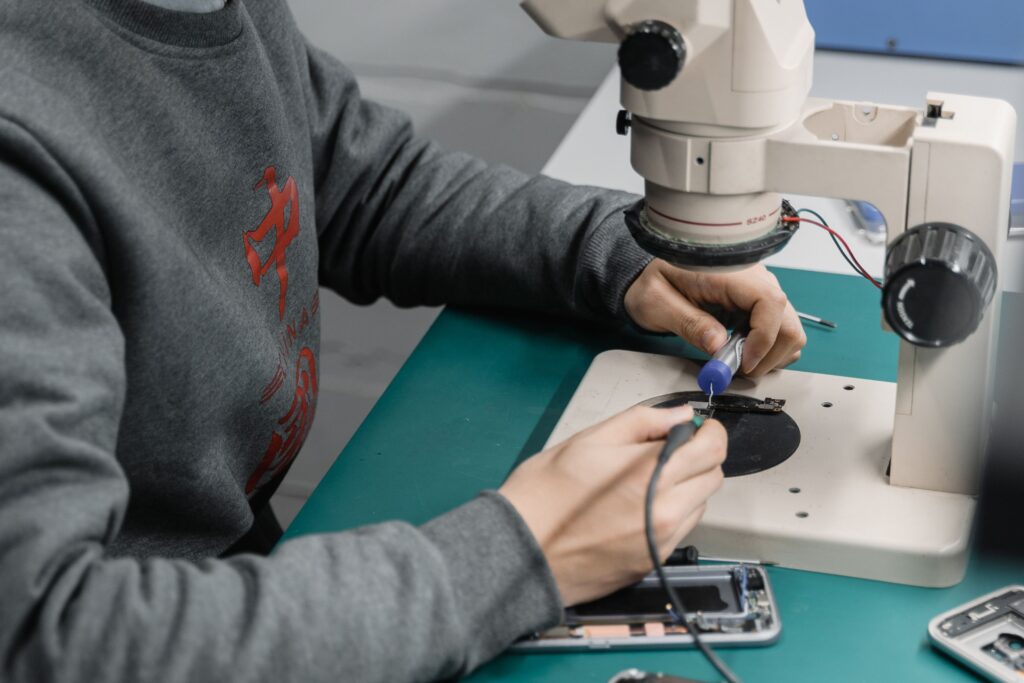
There are several ways to enter the mobile repair industry.
1. Home-Based Repair Service
A technician can begin from a small home workspace and accept repairs through local customers or referrals.
This model may require less initial infrastructure. However, customer access, workspace limitations, and local requirements should be considered.
2. Small Repair Counter
A small counter in a mobile market or local commercial area can provide better visibility.
This model works well for technicians who want regular walk-in customers without immediately building a large service centre.
3. Full-Service Mobile Repair Shop
A larger shop can offer multiple services, such as:
- Hardware repair
- Software troubleshooting
- Display repair
- iPhone repair
- Android repair
- Glass replacement
- Advanced motherboard work
The investment is generally higher, but the wider service range can create more opportunities.
4. Repair and Refurbishment Business
Experienced technicians can also explore refurbishment and component-level repair.
This requires stronger technical skills, quality control, inventory management, and reliable sourcing.
Identify Your Target Customers
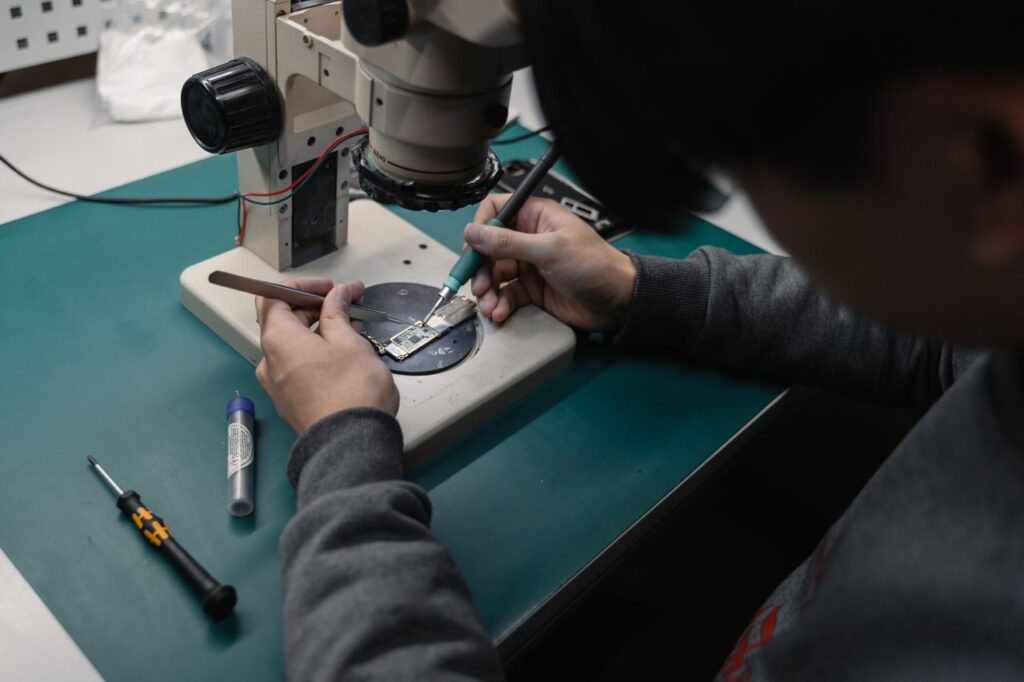
Before choosing your services, identify the people you want to serve.
Your potential customers may include:
- Local smartphone users
- Students
- Office workers
- Small businesses
- Smartphone retailers
- Refurbished phone sellers
- Other repair shops requiring specialised services
Your location can influence your customer profile.
For example, a shop near a college may see demand for affordable repairs, while a premium commercial area may have more customers looking for iPhone and advanced display services.
Choose Your Repair Services

Do not try to offer every repair on your first day.
Start with services you can perform confidently.
Basic Services
- Charging problems
- Speaker and microphone issues
- Battery replacement
- Camera-related repairs
- Connector replacement
- Software troubleshooting
Display Services
As your skills develop, you can add:
- Mobile display replacement
- Display refurbishment
- Edge glass repair
- OLED and AMOLED display work
- Display line repair
Advanced Services
Experienced technicians can expand into:
- Motherboard repair
- COF IC work
- Track repair
- Fold and Flip display repair
- Advanced iPhone repair
A gradual service expansion can help you manage investment more effectively.
Estimate Your Initial Investment
Your Mobile Repair Business Plan should include a realistic investment estimate.
Major categories may include:
| Investment Area | What to Consider |
|---|---|
| Shop | Rent, deposit and basic setup |
| Furniture | Workbench, chair, storage |
| Basic Tools | Screwdrivers, tweezers, pry tools |
| Repair Equipment | Soldering and hot-air equipment |
| Testing Equipment | Multimeter, DC power supply and testers |
| Advanced Machines | Display and refurbishment equipment |
| Spare Parts | Initial inventory |
| Computer | Billing, records and software work |
| Branding | Signboard, visiting cards and promotional material |
| Marketing | Digital and local promotion |
| Training | Technical and practical education |
The exact investment varies significantly by location, shop size, service range, equipment quality, and business model.
For a more detailed breakdown, connect this article to your existing Mobile Repair Business Investment and Mobile Repair Shop Setup Cost articles.
Plan Your Mobile Repair Shop Equipment
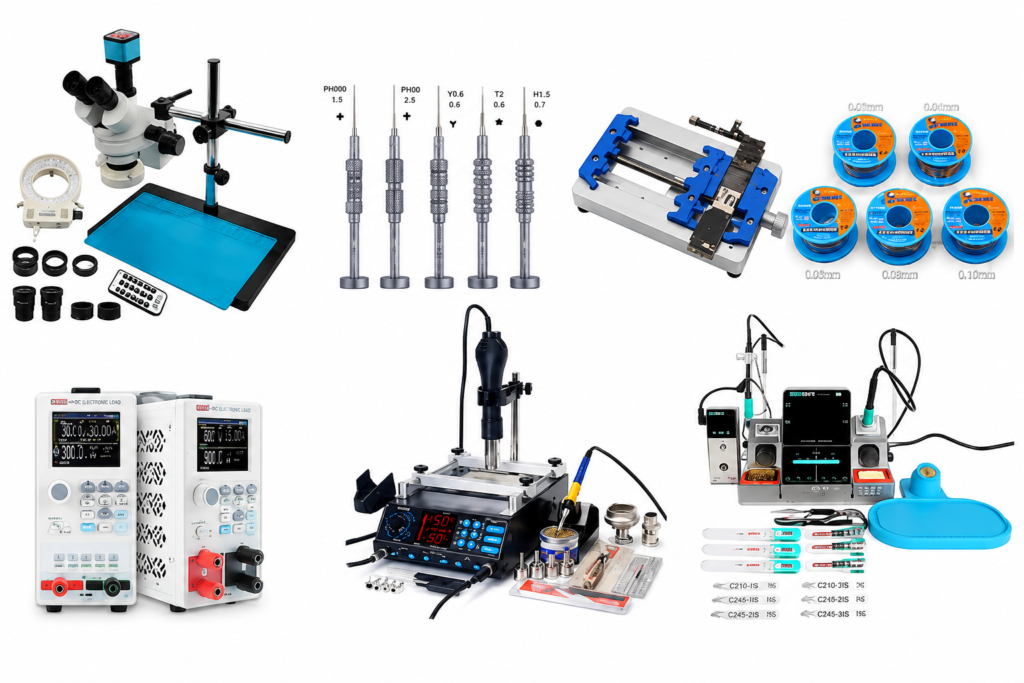
Equipment should be purchased according to the services you plan to provide.
A basic workstation may include:
- Precision screwdriver set
- Tweezers
- Pry tools
- Magnetic repair mat
- ESD protection
- Soldering station
- Hot air station
- Digital multimeter
- DC power supply
- Microscope
If you plan to specialise in display refurbishment, you may later require specialised display equipment.
Avoid buying expensive machines simply because they are available. First understand the repair process and expected customer demand.
For a detailed checklist, read your Mobile Repair Tools List PDF article and Best Mobile Repair Tools guide.
Choose the Right Location
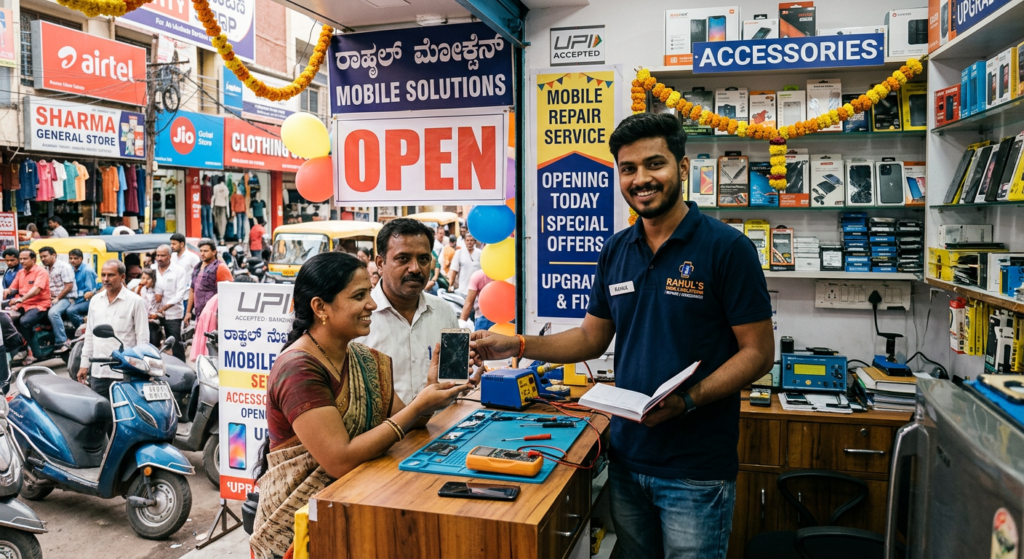
Location can have a major impact on a local repair business.
When comparing locations, consider:
Customer Footfall
A busy market can provide more visibility, although rent may also be higher.
Competition
Nearby repair shops are not always a disadvantage. A strong mobile market can indicate existing customer demand.
Accessibility
Customers should be able to find and reach your shop easily.
Parking and Transport
Convenient access can improve the customer experience.
Local Demand
Study the types of smartphones commonly used in the area and the repair services already available.
Create Your Pricing Strategy

Pricing should cover your costs while remaining competitive.
Consider:
Repair Price = Parts Cost + Labour + Operating Cost + Desired Margin
However, pricing should not be based only on what competitors charge.
Also consider:
- Repair difficulty
- Time required
- Part quality
- Warranty offered
- Technician skill
- Customer expectations
Be transparent about pricing before beginning major repairs.
Plan Your Daily Operations
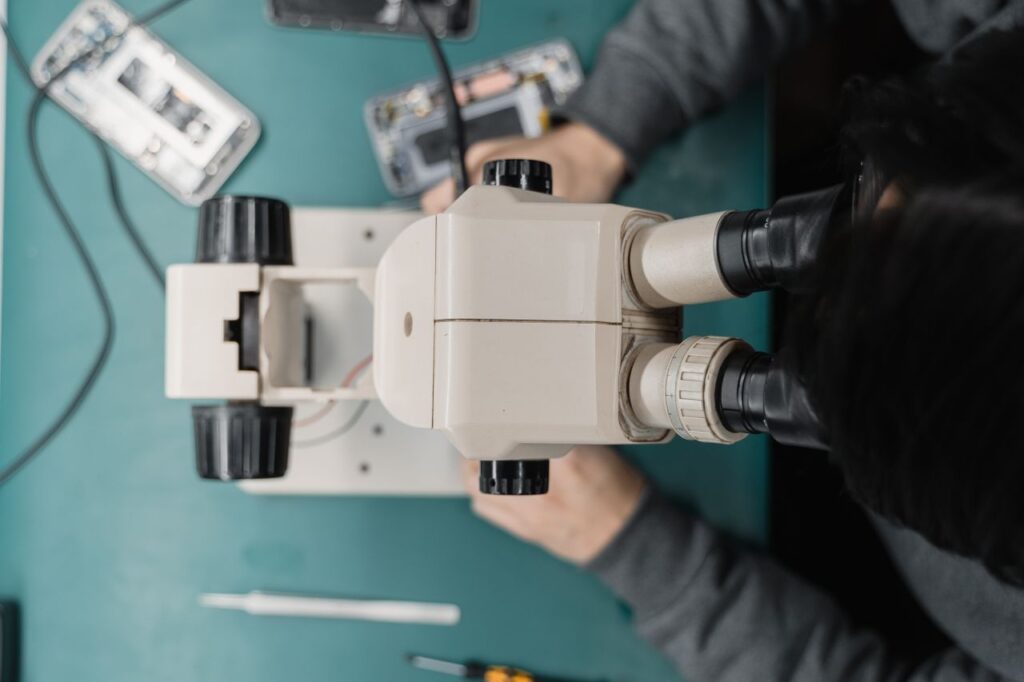
A repair shop needs an organised workflow.
A simple process can be:
Customer Enquiry → Device Inspection → Diagnosis → Price Confirmation → Repair → Testing → Customer Handover → Follow-Up
Keep records of:
- Customer details
- Device model
- Reported problem
- Device condition
- Repair performed
- Parts used
- Amount charged
- Warranty information
Good records can reduce confusion and improve customer service.
Build a Mobile Repair Shop Marketing Strategy

Technical skills bring value, but customers first need to know your business exists.
Your marketing plan can include:
Google Business Profile
Maintain accurate business information, photos, working hours, and genuine customer reviews.
Local SEO
Create useful pages targeting relevant local searches such as:
- Mobile Repair Shop in Delhi
- Mobile Display Repair in Delhi
- iPhone Repair in Delhi
Social Media
Share:
- Repair tips
- Before-and-after work
- Educational videos
- Customer testimonials
- Workshop content
Use WhatsApp for customer communication, repair updates, and enquiries while respecting customer consent.
Referral Marketing
Satisfied customers can become an important source of new business.
For more information, connect this article with your Mobile Repair Shop Marketing guide.
Manage Spare Parts and Inventory
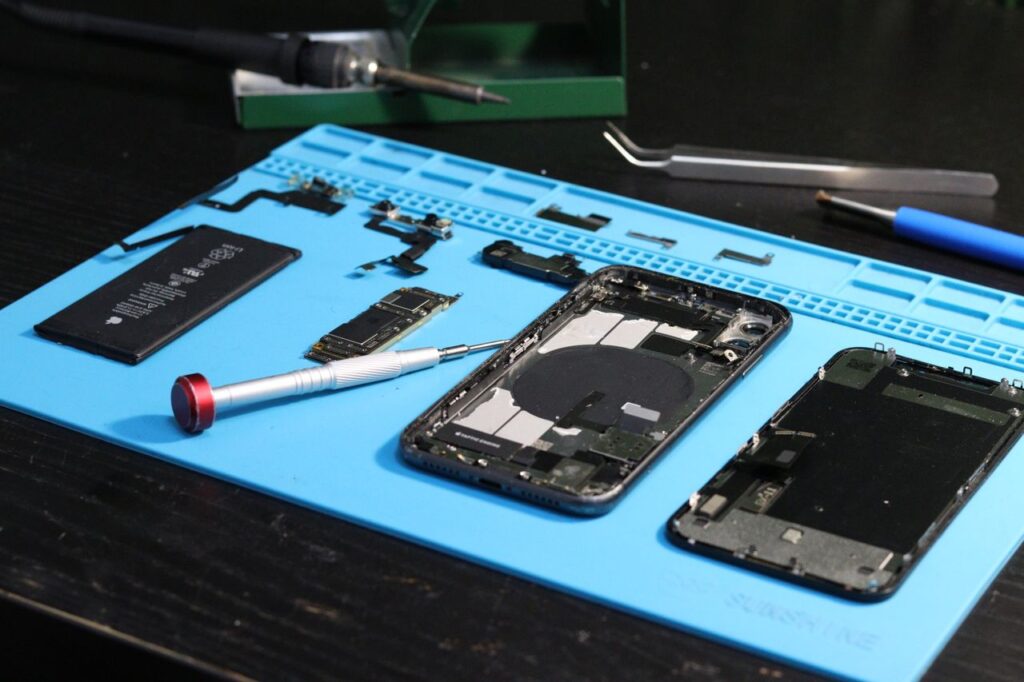
Inventory can become a major expense if it is not managed carefully.
Avoid purchasing large quantities of slow-moving parts.
Instead:
- Identify common phone models in your area.
- Track frequently used parts.
- Maintain supplier records.
- Check part quality before installation.
- Record inventory movement.
Good inventory management protects your working capital.
Calculate Revenue and Profit
A business plan should distinguish between revenue and profit.
For example:
Monthly Revenue = Total Completed Repairs × Average Repair Value
Then consider expenses such as:
- Rent
- Electricity
- Salaries
- Spare parts
- Consumables
- Marketing
- Maintenance
- Internet and software
- Other operating costs
Estimated Profit = Revenue − Total Business Expenses
Do not build your plan around guaranteed income figures. Actual results depend on location, customer demand, pricing, repair quality, operating costs, and many other factors.
Plan for Business Growth
Once your basic operation becomes stable, consider expanding your services.
Possible areas include:
- iPhone repair
- Advanced display repair
- Edge glass repair
- COF IC training and services
- Fold and Flip display repair
- Refurbishment
- Accessories
- B2B repair services
- Technician training
Growth should follow actual customer demand and your technical capabilities.
Common Mistakes to Avoid
Buying Too Much Equipment
Expensive equipment does not automatically create customers.
Ignoring Training
Incorrect repairs can result in financial losses and damaged customer relationships.
Under-pricing Services
Low prices may attract customers but can make the business difficult to sustain.
Poor Record Keeping
Without proper records, it becomes difficult to understand expenses, inventory, and profitability.
Ignoring Online Reviews
Customers increasingly use online information when choosing local businesses.
Offering Repairs You Cannot Perform
It is better to be transparent than to accept a repair without the necessary skills or equipment.
Training Before Starting Your Business

A strong business plan should include technical training as part of the initial preparation.
Before accepting customer devices, technicians should understand:
- Fault diagnosis
- Smartphone disassembly
- Soldering
- ESD safety
- Display repair
- Software troubleshooting
- Testing procedures
- Customer communication
Practical training can help beginners develop confidence before working independently.
Why Choose Screen Fixer Institute?
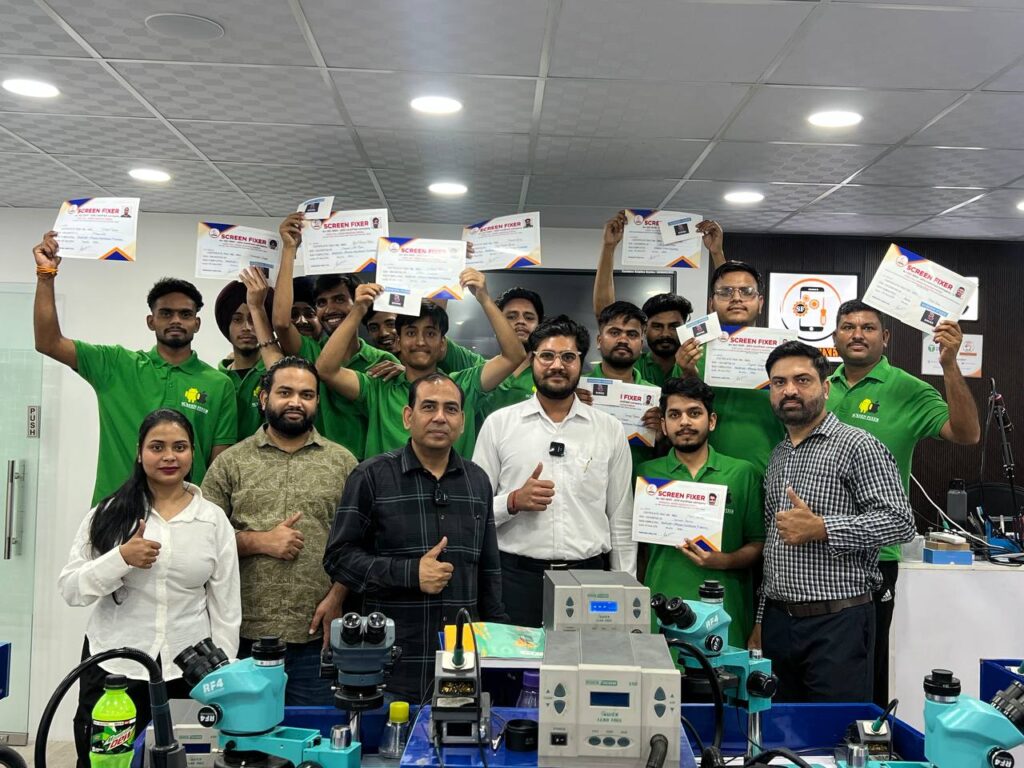
At Screen Fixer Institute, students can develop practical skills for careers and business opportunities in mobile repairing.
Training areas include:
- Android & iPhone Repair
- Mobile Hardware Repair
- Mobile Display Repair
- Edge Glass Repair
- Flex Bonding
- Track Repair
- COF IC Training
- Display Line Repair
- Fold & Flip Display Training
- Practical Fault Diagnosis
- Professional Tool Handling
The focus is on practical learning so students can understand repair processes and professional equipment in a structured training environment.
Suggested Articles Links
Read more related articles:
- Mobile Repairing Business Guide
- Mobile Repair Business Investment
- Mobile Repair Shop Setup Cost
- Mobile Repair Shop Equipment List
- Mobile Repair Shop Marketing
- Best Mobile Repair Tools
- Mobile Repair Tools List PDF
- How to Start a Mobile Repair Shop
- Mobile Repair Technician Career
- Mobile Repairing Course
- Mobile Repairing Course Fees in Delhi
- Mobile Repair Training for Beginners
Advanced service links:
- Mobile Display Repairing Course
- iPhone Display Repairing Course
- Edge Glass Display Repairing Course
- COF IC Training
- Display Line Repair Training
- Fold & Flip Display Training
These links create a connected content cluster and help readers move from business research to training and specialised repair topics.
Trusted Industry Resources
To stay updated with smartphone technologies, you can also explore these trusted resources:
- Apple Support – https://support.apple.com/
- Android Developers – https://developer.android.com/
- iFixit Repair Guides – https://www.ifixit.com/
These resources provide additional educational information and improve user trust.
Frequently Asked Questions
Is a business plan necessary for a mobile repair shop?
Yes. A simple business plan can help you understand your investment, services, expenses, target customers, and growth strategy before you start spending money.
How much investment is required to start a mobile repair business?
There is no single amount that applies to every business. Investment depends on location, shop size, equipment, inventory, services, and training.
Can I start a mobile repair business from home?
A home-based model can be an option for some technicians. However, local rules, workspace requirements, customer access, and business needs should be considered.
Which services should a beginner offer?
Start with repairs you can perform safely and confidently. Expand into advanced display, motherboard, and specialised repairs after gaining appropriate training and experience.
Is mobile repair a good business?
It can be a viable business for people who develop strong technical skills, provide reliable service, manage costs carefully, and build a consistent customer base. Results vary by market and business execution.
Should I invest in advanced machines immediately?
Not necessarily. Start with equipment that matches your current services and add specialised machines as your skills and customer demand grow.
Start Your Mobile Repair Career with Screen Fixer Institute
Planning to start a mobile repair business?
The first investment should be in knowledge and practical skills.
At Screen Fixer Institute, students can learn mobile repair techniques through practical training covering Android, iPhone, display repair, advanced display technologies, and other specialised areas.
Why Choose Screen Fixer Institute?
✅ 100% Practical Training
✅ Android & iPhone Repair
✅ Mobile Hardware Repair
✅ Mobile Display Repair
✅ Edge Glass Repair
✅ Flex Bonding
✅ Track Repair
✅ COF IC Training
✅ Display Line Repair
✅ Fold & Flip Display Training
✅ Industry-Experienced Trainers
✅ Course Completion Certificate
✅ Lifetime Technical Support
Call / WhatsApp
+91 9250414142
Visit Screen Fixer Institute
https://www.screenfixerdelhi.com
Conclusion
A successful mobile repair business starts with more than a shop and a toolbox. It starts with a clear plan.
Your Mobile Repair Business Plan should cover your target customers, services, investment, equipment, location, pricing, marketing, inventory, daily operations, and long-term growth.
Start with the skills and services you can manage confidently. Then expand as your experience, customer base, and business demand grow.
With practical training, careful financial planning, professional customer service, and consistent marketing, you can build a stronger foundation for your mobile repair business.