
Introduction
If you are planning to join a Mobile Repairing Course in Delhi, one of the first questions you may have is: How many days does a mobile repairing course take?
The answer depends on the type of training you choose. A specialized course such as Android, iPhone, Mobile Display or COF IC training generally takes 20–30 days, while the broader Mobile Hardware & Software Course takes approximately 45 days.
The duration is important, but the practical training included during those days is equally important. Mobile repairing is a hands-on skill, so students need regular practical work to understand tools, fault diagnosis, components and repair procedures.
This guide explains the course-wise duration, what students can learn during the training period, the difference between course duration and learning time, and what to consider before taking admission.
- Introduction
- How Many Days Is a Mobile Repairing Course?
- Mobile Repairing Course Duration in Delhi
- Android Mobile Repairing Course – 20–30 Days
- iPhone Repairing Course – 20–30 Days
- Mobile Display Repair Course – 20–30 Days
- COF IC Course – 20–30 Days
- Mobile Hardware & Software Course – Approximately 45 Days
- Why Does Mobile Repairing Course Duration Vary?
- What Can You Learn During 20–30 Days of Training?
- What Can You Learn During Approximately 45 Days of Hardware & Software Training?
- Course Duration vs Learning Time: Are They the Same?
- Is a Longer Mobile Repairing Course Always Better?
- Why Practical Training Matters
- Which Tools Are Used in Mobile Repairing Training?
- Who Can Join a Mobile Repairing Course?
- What Happens After Completing the Course?
- Why Choose Practical Mobile Repairing Training at Screen Fixer Institute?
- Mobile Repairing Course Duration and Fees
- How to Choose the Right Course Duration
- Suggested Related Articles
- Trusted Global Resources
- Frequently Asked Questions
- How many days is a mobile repairing course?
- How long is an Android mobile repairing course?
- How long is an iPhone repairing course?
- How long is a mobile display repairing course?
- How long is a COF IC course?
- How long is the Mobile Hardware & Software Course?
- Can I learn mobile repairing in 20–30 days?
- Is 45 days enough to learn mobile hardware and software?
- Can beginners join a mobile repairing course?
- Is practical training important?
- Can I start a mobile repair business after training?
- Enquire About Mobile Repairing Training in Delhi
- Join Screen Fixer Institute
How Many Days Is a Mobile Repairing Course?
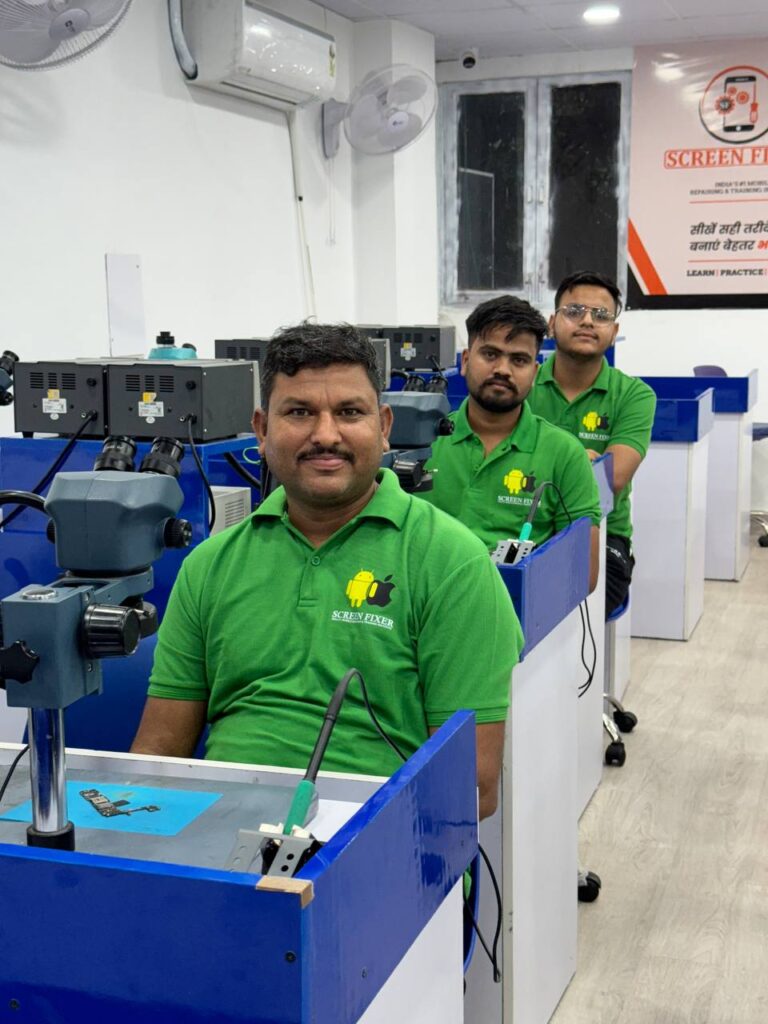
At Screen Fixer Institute, the duration depends on the selected course and specialization.
| Mobile Repairing Course | Approximate Duration |
|---|---|
| Android Mobile Repairing Course | 20–30 Days |
| iPhone Repairing Course | 20–30 Days |
| Mobile Display Repair Course | 20–30 Days |
| COF IC Course | 20–30 Days |
| Mobile Hardware & Software Course | Approximately 45 Days |
The exact learning experience can vary depending on the student’s previous experience, practice level and the modules covered in the selected training.
Mobile Repairing Course Duration in Delhi
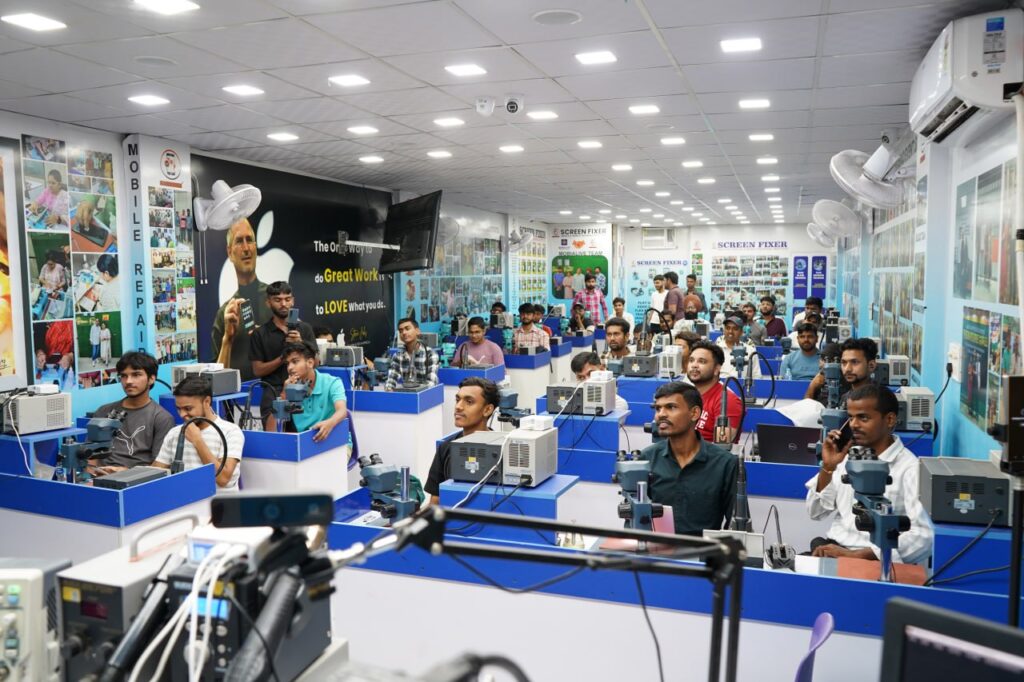
Mobile repairing is not a single skill. Modern smartphones contain hardware, software, display assemblies, motherboard components and different types of circuit sections.
Because of this, the training period depends on the course you select.
Android Mobile Repairing Course – 20–30 Days
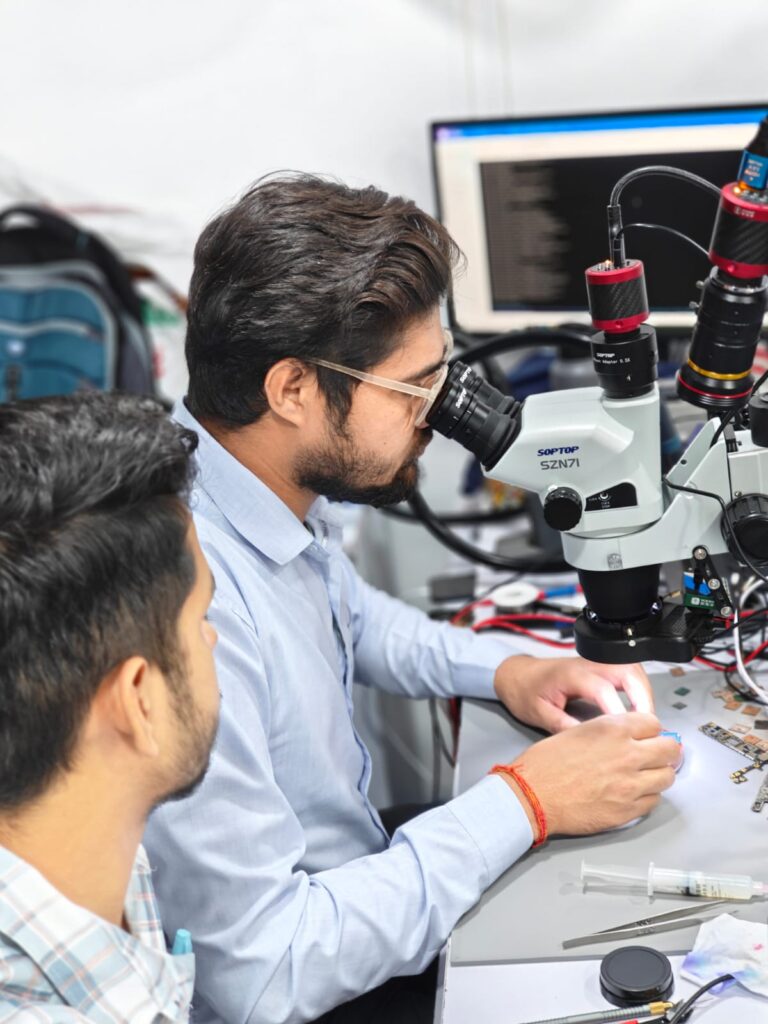
The Android course is designed for students who want to learn practical Android mobile repairing skills.
Training can include areas such as:
- Mobile parts identification
- Basic electronics
- Tool handling
- Hardware fault diagnosis
- Charging-related problems
- Component testing
- Display-related faults
- Smartphone troubleshooting
- Practical repair procedures
Students can also progress toward more advanced hardware and motherboard-related work as they build their practical skills.
Read more: Android Mobile Repairing Course in Delhi
iPhone Repairing Course – 20–30 Days
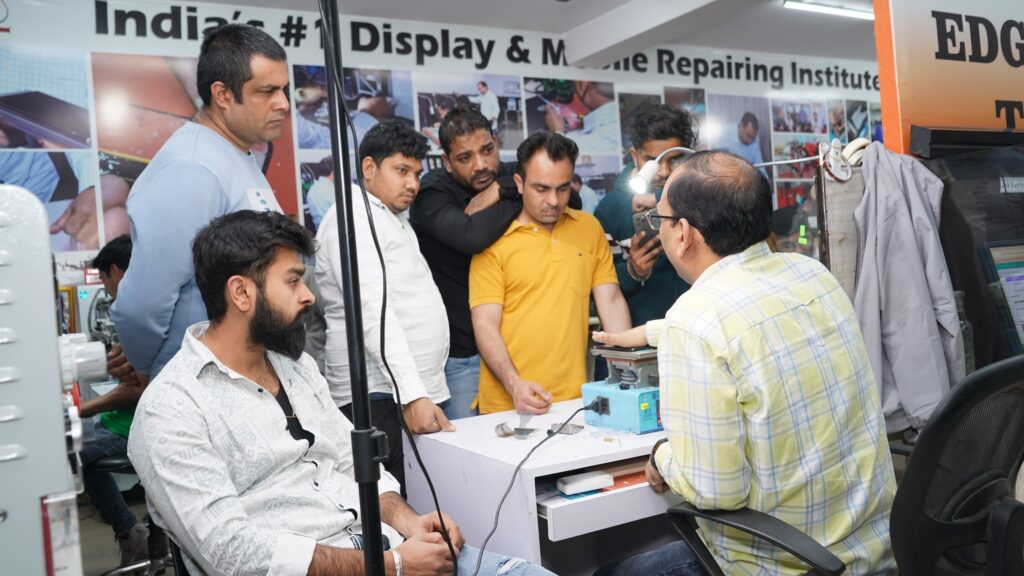
iPhone repairing requires careful handling of components and practical understanding of device architecture.
A specialized iPhone repairing course may cover:
- iPhone hardware identification
- Component testing
- Common hardware faults
- Display-related repair
- Charging-section troubleshooting
- Motherboard-related diagnosis
- Practical repair techniques
- Safe handling of iPhone components
Students who already have mobile repairing experience may find it easier to progress through advanced practical work, while beginners may need additional practice to become comfortable with different repair procedures.
Read more: iPhone Repairing Course Fees in Delhi
Mobile Display Repair Course – 20–30 Days
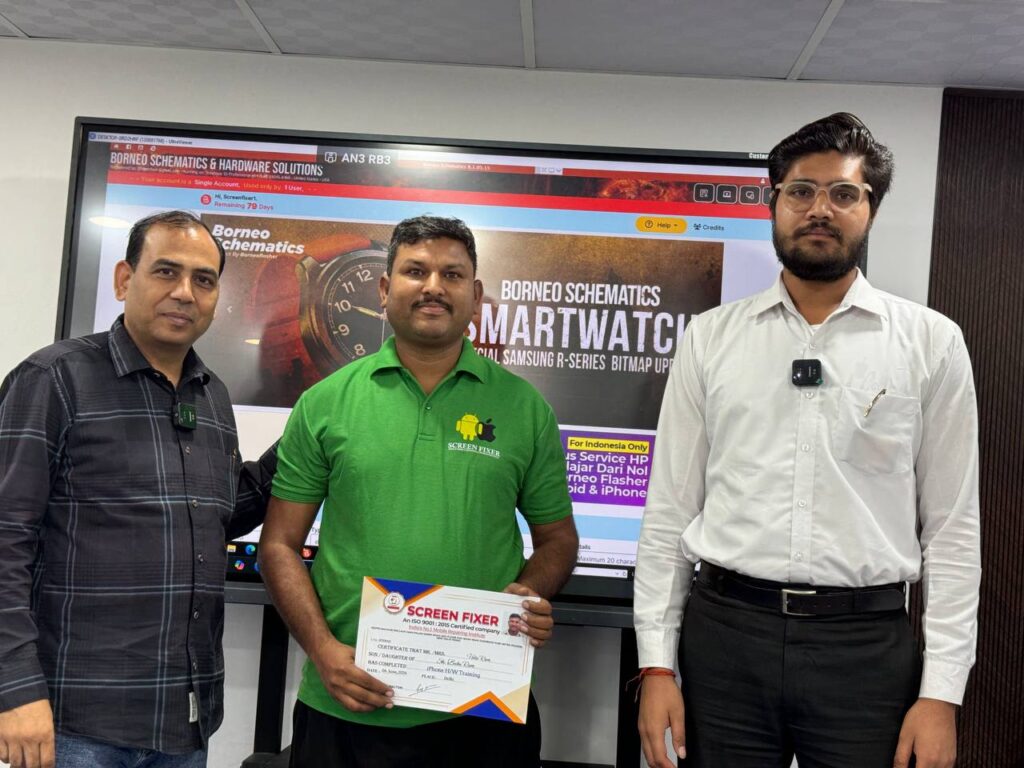
Display repair is a specialized area of the mobile repairing industry. It involves careful handling of LCD, OLED, AMOLED and other display assemblies.
Depending on the selected training module, students may learn practical skills such as:
- Display diagnosis
- Display testing
- Glass separation
- OCA lamination
- Bubble removal
- Display alignment
- Edge display work
- Flex bonding
- Display line-related work
The actual modules depend on the display training selected.
Students interested specifically in display repair can also explore the detailed Mobile Display Repair Course Fees in Delhi guide.
COF IC Course – 20–30 Days
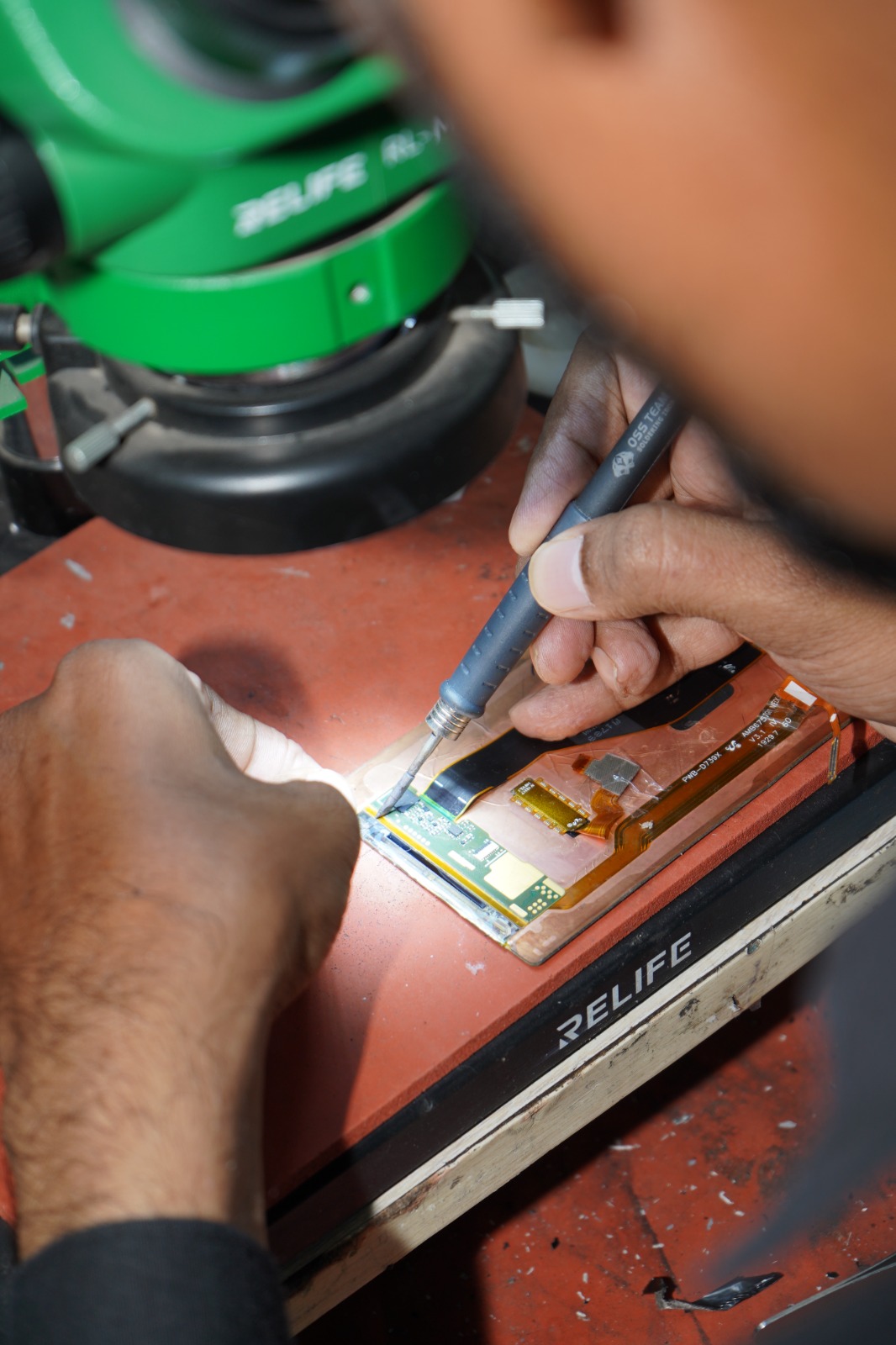
COF IC training is an advanced display-related specialization.
COF stands for Chip On Flex. Training in this area requires careful handling, microscopic work and practical experience with suitable display panels.
The training can include:
- COF IC identification
- Fault identification
- Safe IC removal
- Cleaning and preparation
- IC refitting
- Alignment
- Microscopic handling
- Practical display repair
COF IC training is particularly relevant for technicians who already have some display repair experience or want to add an advanced specialization to their existing skills.
Read more: COF IC Training
Mobile Hardware & Software Course – Approximately 45 Days
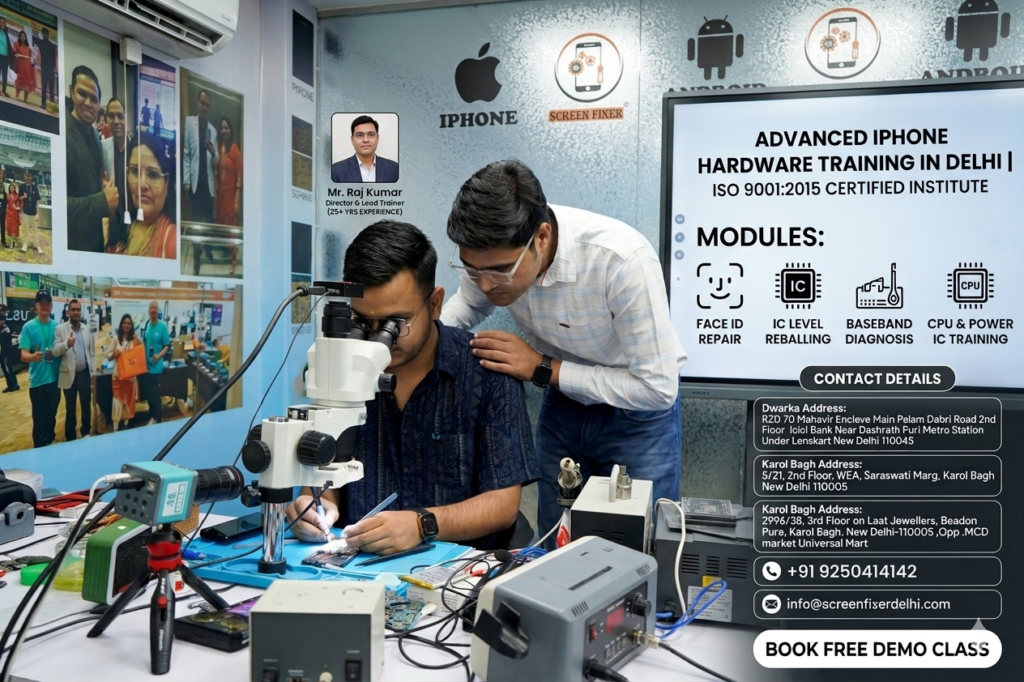
The Mobile Hardware & Software Course takes longer because it covers a broader range of mobile repairing skills.
The training can include both hardware and software-related topics along with practical troubleshooting.
Hardware Training
Students can learn about:
- Smartphone hardware
- Mobile components
- Motherboard identification
- Voltage testing
- Charging-section faults
- Component testing
- Fault diagnosis
- Hardware troubleshooting
- IC-related repair work
- Track-level repair concepts
Software Training
The software portion can cover areas such as:
- Software diagnosis
- Firmware-related troubleshooting
- Boot problems
- Software errors
- Device testing
- Recovery and troubleshooting procedures
The broader syllabus is one reason this course has a longer duration of approximately 45 days.
Why Does Mobile Repairing Course Duration Vary?
Different mobile repairing courses have different durations because the scope of training is different.
Some important factors are:
1. Course Syllabus
A specialized course covering one area can usually be completed in less time than a broad program covering hardware, software and multiple repair categories.
2. Practical Training
Mobile repairing is a practical skill. Students need time to work with tools, devices, components and real repair situations.
3. Course Specialization
Android, iPhone, Display and COF IC are different technical areas. A student choosing one specialization may have a different training schedule from someone taking a broader hardware and software course.
4. Previous Experience
A student who has already worked in mobile repairing may be familiar with basic tools and components, while a complete beginner may need more practice with the fundamentals.
5. Practice Time
Two students attending the same course can progress at different speeds. Regular practice after class can help improve confidence and technical accuracy.
What Can You Learn During 20–30 Days of Training?
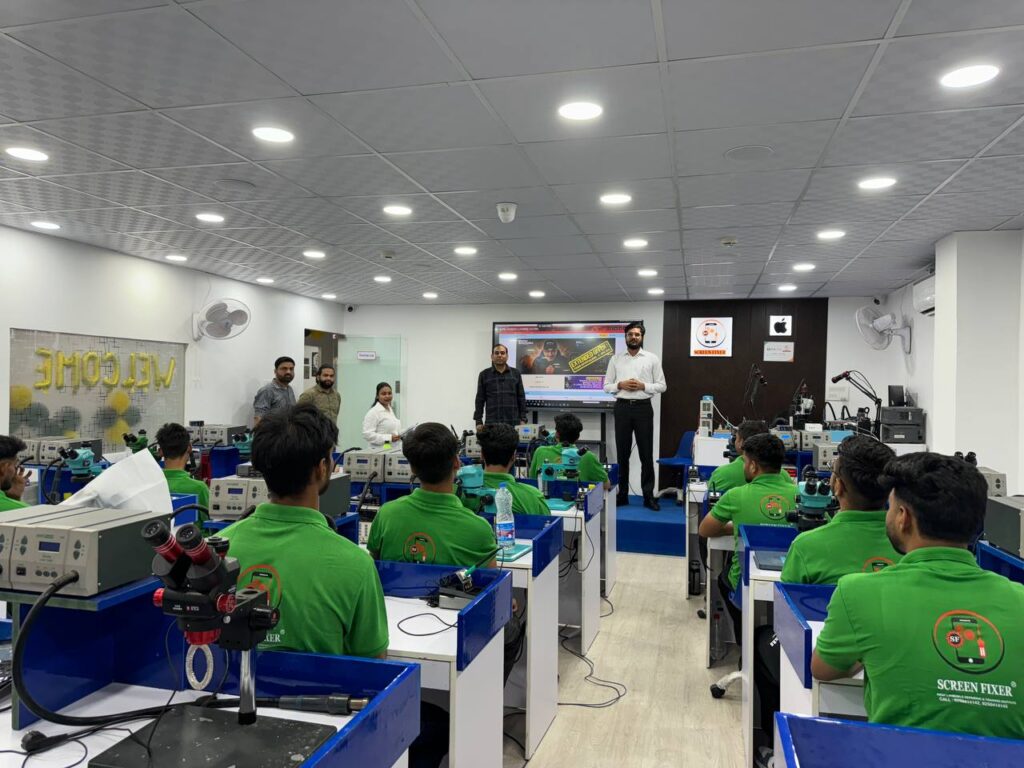
A 20–30 day specialized course is designed to focus on the selected skill rather than trying to cover every area of mobile repairing.
For example, depending on the course, the training may focus on:
Android: hardware troubleshooting and Android repair skills.
iPhone: iPhone-specific repair and troubleshooting.
Display: display repair and related practical processes.
COF IC: advanced display and COF IC-related practical work.
The goal should be to develop practical understanding step by step rather than simply completing a fixed number of classroom hours.
What Can You Learn During Approximately 45 Days of Hardware & Software Training?
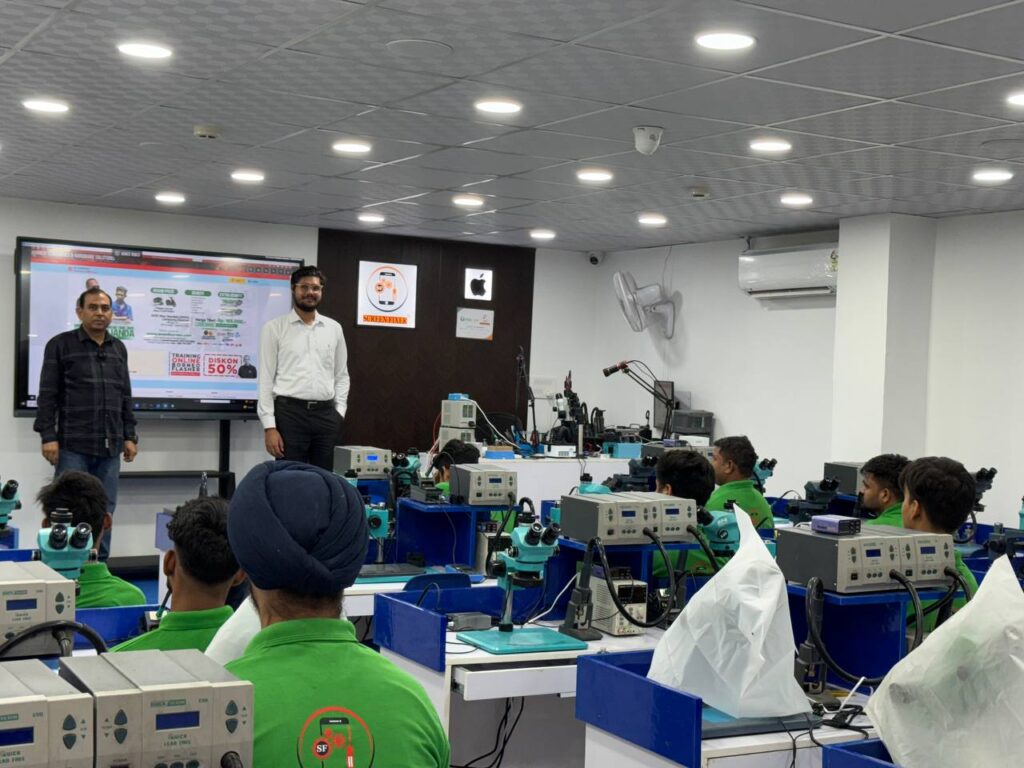
A broader 45-day program provides more time to cover multiple areas.
The training may move from basic concepts toward more advanced repair work.
A typical learning progression can look like this:
Step 1: Learn mobile components and basic electronics.
Step 2: Understand tools and testing methods.
Step 3: Learn basic hardware fault diagnosis.
Step 4: Practice component-level repair.
Step 5: Learn software troubleshooting.
Step 6: Practice motherboard and advanced repair procedures.
Step 7: Perform practical testing and fault diagnosis.
The exact sequence depends on the institute’s syllabus and the student’s level.
Course Duration vs Learning Time: Are They the Same?
No.
Course duration is the scheduled period of training.
Learning time is the time a student needs to become comfortable performing different repair tasks through practice.
For example, a student may complete a 20–30 day specialized course, but continued practice may still be necessary before confidently handling a wide range of devices and faults.
This is normal for any practical technical skill.
The objective of training is to give students a structured foundation, practical exposure and guidance so they can continue improving their skills through practice.
Is a Longer Mobile Repairing Course Always Better?
Not necessarily.
The right duration depends on what you want to learn.
If your goal is to specialize in one area such as Android, iPhone, Display or COF IC, a 20–30 day specialized course may match that learning objective.
If you want broader training covering both hardware and software, a program of approximately 45 days provides more time for the wider syllabus.
Therefore, compare the course modules and practical work, not only the number of days.
Why Practical Training Matters
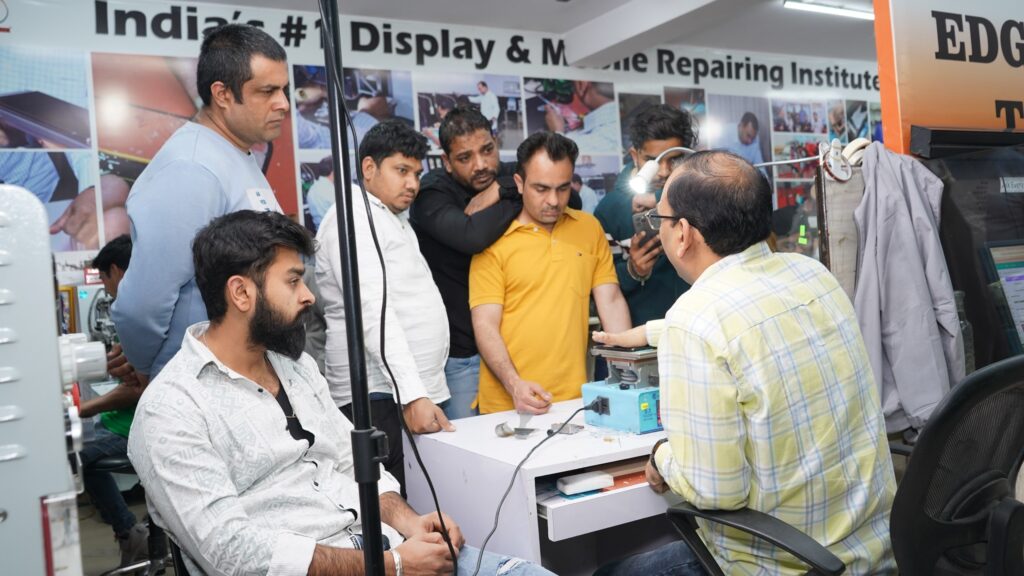
Mobile repairing cannot be learned effectively through theory alone.
Students need practical exposure to understand:
- How components are identified
- How testing is performed
- How tools are handled
- How faults are diagnosed
- How repair procedures are performed
- How a device is tested after repair
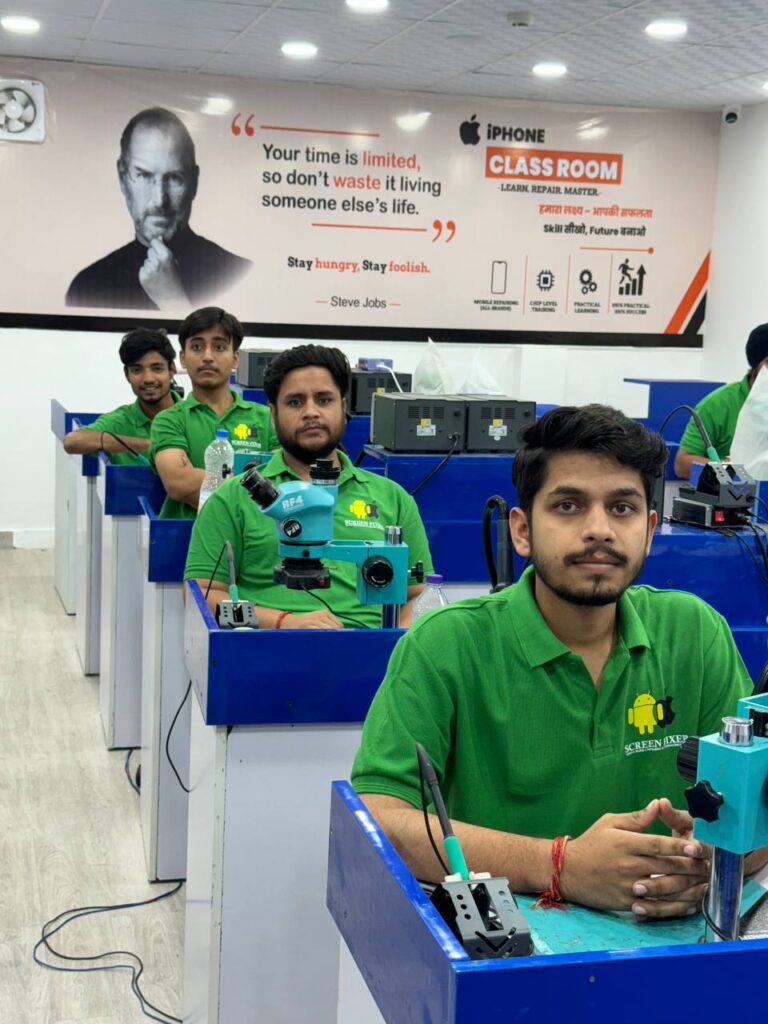
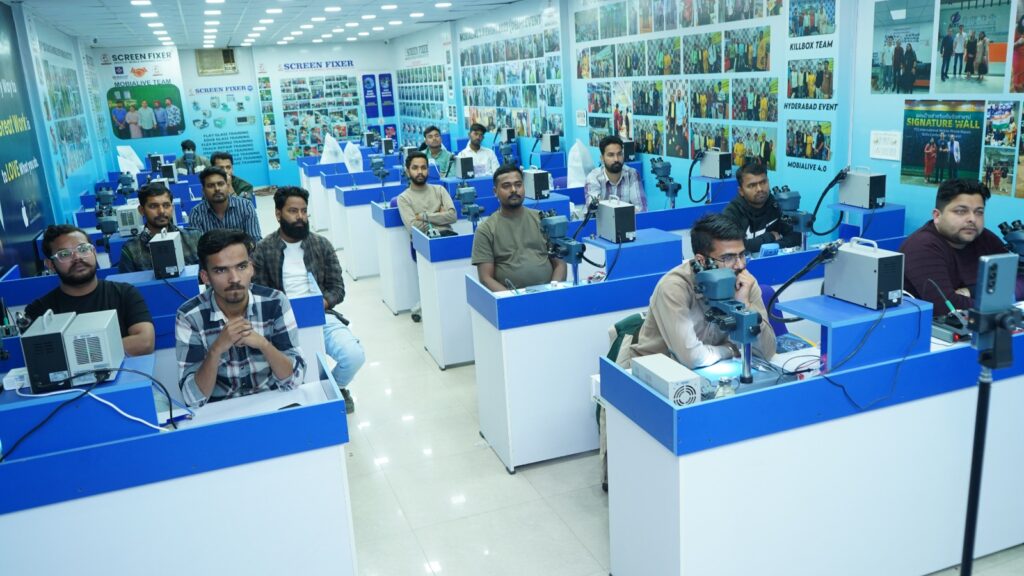
At Screen Fixer Institute, practical training includes working with repair tools and equipment and practicing repair procedures on mobile devices.
The objective is to help students understand the complete repair process rather than simply memorize technical information.
Which Tools Are Used in Mobile Repairing Training?
Depending on the selected course and practical module, students may work with tools and equipment such as:
- Digital multimeter
- DC power supply
- Soldering station
- Hot air rework station
- Microscope
- Display tester
- Other specialized repair equipment
Students should also understand the correct use of each tool and the safety precautions required during practical work.
For a detailed tools guide, see: Mobile Repairing Tools List
Who Can Join a Mobile Repairing Course?
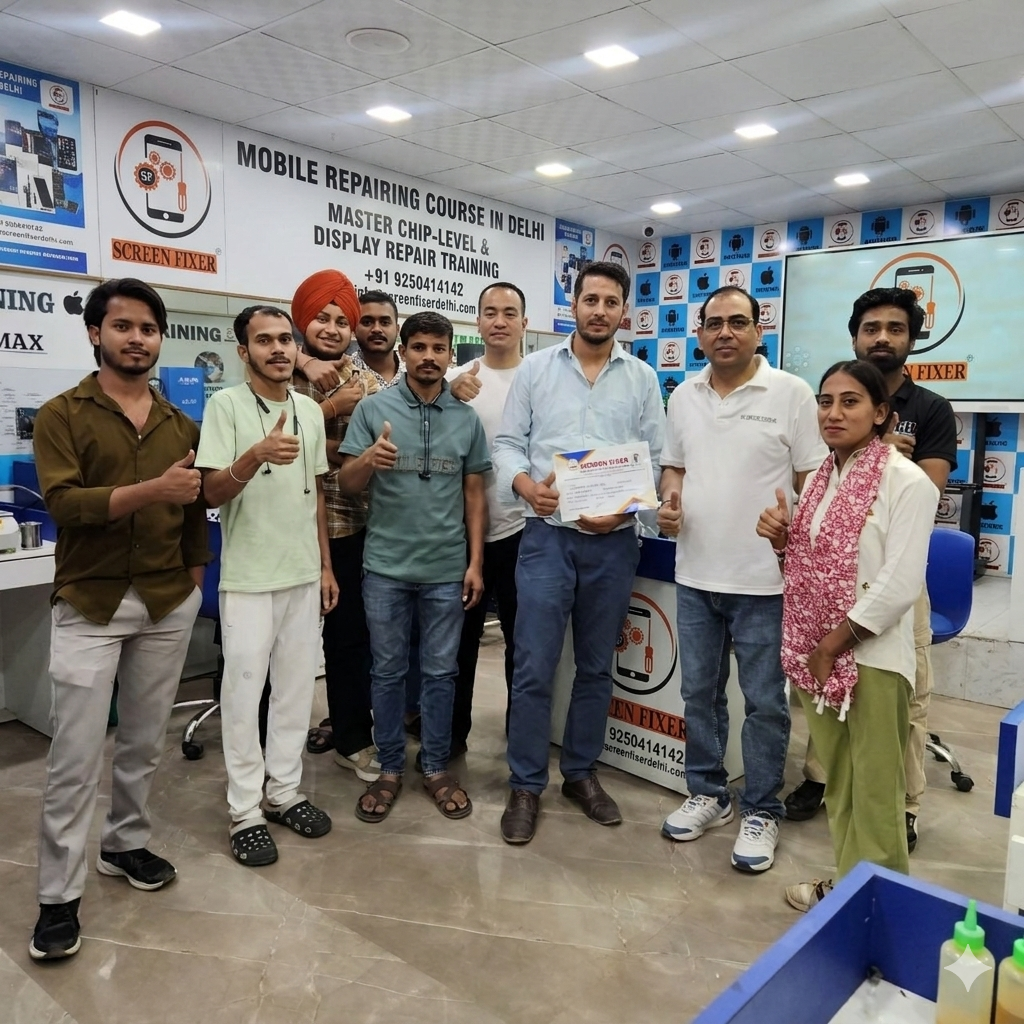
A practical mobile repairing course can be suitable for different types of learners.
Depending on the course, students may include:
- Students after Class 10
- Students after Class 12
- College students
- ITI students
- Diploma holders
- Working professionals
- Existing mobile technicians
- Mobile shop owners
- Beginners interested in learning a technical skill
Previous repair experience is not always necessary for beginner-level training.
For detailed eligibility information, read:
Mobile Repairing Course Eligibility – Complete Guide
What Happens After Completing the Course?
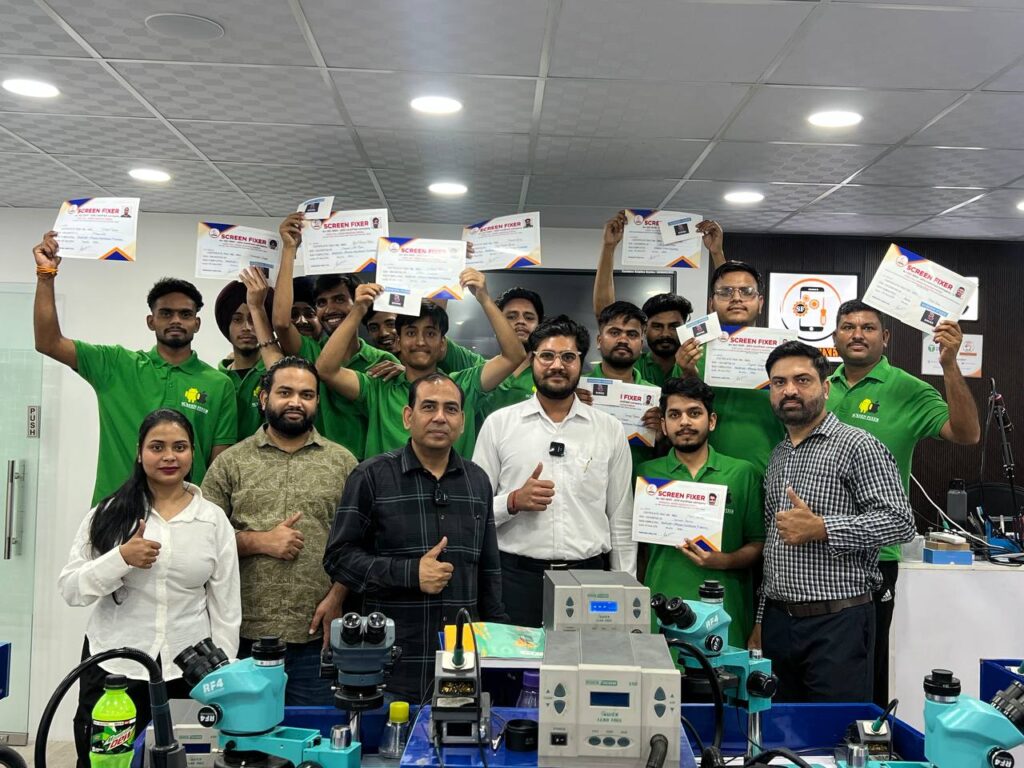
After completing training, students can continue developing their skills through regular practice and may explore different career paths.
Possible directions include:
- Mobile repair technician
- Service centre technician
- Independent repair work
- Display repair specialization
- iPhone repair specialization
- Advanced motherboard repair
- Freelance repair services
- Starting a mobile repair business after gaining suitable practical experience
Career outcomes can vary depending on technical skill, experience, location, business setup and the type of repair work performed.
For more information, see: Mobile Repair Technician Career and Mobile Repairing Salary in India
Why Choose Practical Mobile Repairing Training at Screen Fixer Institute?
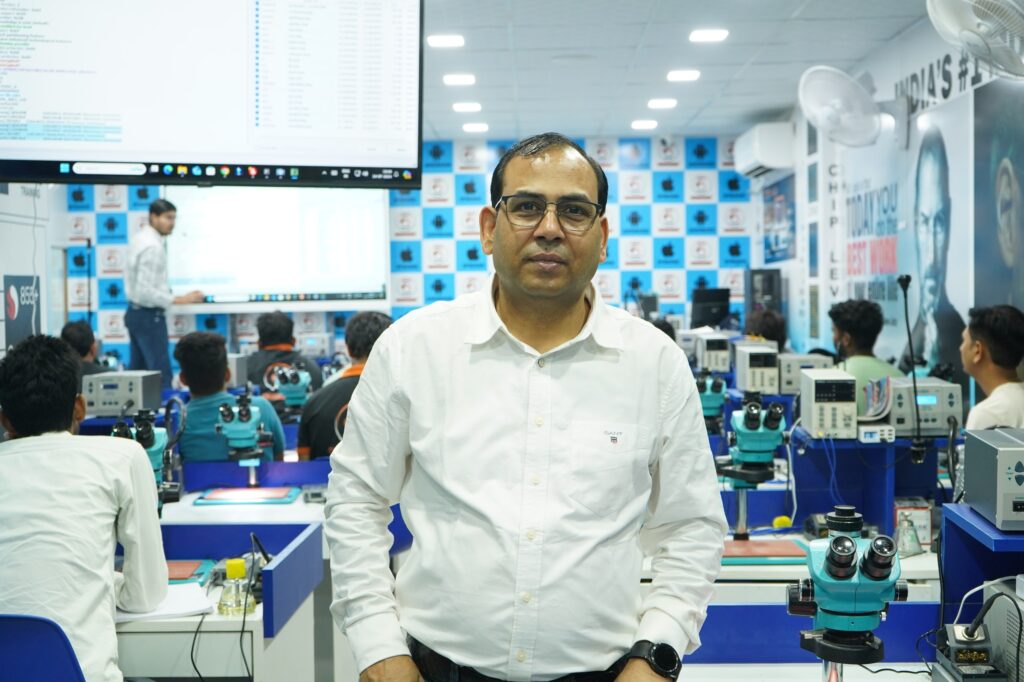
Screen Fixer Institute provides practical training in multiple areas of mobile and display repair.
Training areas include:
- Android Mobile Repair
- iPhone Repair
- Mobile Hardware
- Mobile Software
- Display Repair
- Flex Bonding
- Display Line Repair
- COF IC Training
- Fold & Flip Display Training
The institute also highlights:
- 100% practical training
- Live device practice
- Experienced trainers
- Course completion certificate
- Lifetime technical support
- Business guidance
Students should review the exact syllabus and course structure before selecting the training program that matches their goals.
Mobile Repairing Course Duration and Fees
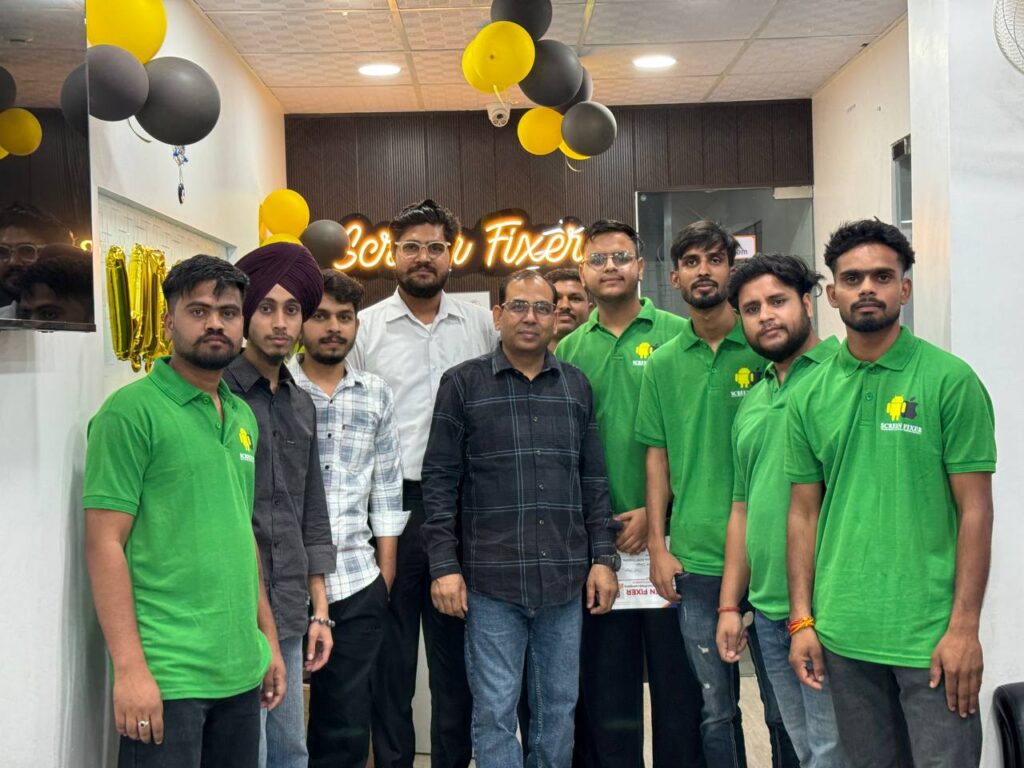
Course duration and fees are related, but they are not the same thing.
Fees can vary depending on:
- Course type
- Training duration
- Practical modules
- Specialization
- Equipment and laboratory facilities
- Level of training
For the latest detailed fee information, read: Mobile Repairing Course Fees in Delhi
Students should compare the complete syllabus, practical training and included modules instead of looking only at the number of days or the course fee.
How to Choose the Right Course Duration
Before taking admission, ask these questions:
What exactly do I want to learn?
Choose a specialized course if you already know the area you want to focus on.
Do I want hardware and software together?
If you want broader training, the Hardware & Software course is designed around a wider syllabus and takes approximately 45 days.
Am I a beginner?
A beginner should understand the starting level of the course and make sure basic concepts are included.
How much practical training is provided?
Ask how much hands-on practice is included and what types of devices and repair processes are covered.
What support is available after training?
Understand what technical support, guidance or other student assistance the institute provides after course completion.
Suggested Related Articles
Read more:
- Mobile Repairing Course
- Mobile Repairing Course Fees in Delhi
- Mobile Repairing Course Eligibility
- Mobile Repair Training for Beginners
- Mobile Repair Technician Career
- Mobile Repairing Salary in India
- Best Mobile Repair Tools
- Mobile Repairing Business Guide
- How to Start a Mobile Repair Shop
- Mobile Display Repairing Course
- Edge Glass Display Repairing Course
- iPhone Display Repairing Course
- COF IC Training
- Display Line Repair Training
- Fold & Flip Display Training
Trusted Global Resources
For additional learning, you can refer to:
- Apple Support – https://support.apple.com/
- Android Developers – https://developer.android.com/
- iFixit Repair Guides – https://www.ifixit.com/
Frequently Asked Questions
How many days is a mobile repairing course?
The duration depends on the course. At Screen Fixer Institute, Android, iPhone, Display and COF IC courses generally take 20–30 days, while the Hardware & Software course takes approximately 45 days.
How long is an Android mobile repairing course?
The Android Mobile Repairing Course generally takes 20–30 days, depending on the training structure and practical modules.
How long is an iPhone repairing course?
The iPhone Repairing Course generally takes 20–30 days.
How long is a mobile display repairing course?
The Mobile Display Repair Course generally takes 20–30 days.
How long is a COF IC course?
The COF IC Course generally takes 20–30 days.
How long is the Mobile Hardware & Software Course?
The Mobile Hardware & Software Course takes approximately 45 days.
Can I learn mobile repairing in 20–30 days?
A 20–30 day specialized course can provide structured practical training in a particular repair area. However, becoming comfortable with a wide range of devices and faults requires continued practice and experience.
Is 45 days enough to learn mobile hardware and software?
Approximately 45 days of structured training can cover a broad hardware and software syllabus. Continued hands-on practice is still important for improving technical skills.
Can beginners join a mobile repairing course?
Yes. Beginner-level training can start with basic electronics, components, tools and troubleshooting before moving toward more advanced repair work.
Is practical training important?
Yes. Mobile repairing is a hands-on technical skill, so practical work is an important part of learning how to diagnose and repair devices.
Can I start a mobile repair business after training?
Training can provide the technical foundation needed to pursue repair work. Starting a business also requires practical experience, tools, investment, customer service and business planning.
Enquire About Mobile Repairing Training in Delhi
Choosing the right course depends on your learning objective.
For specialized training in Android, iPhone, Display or COF IC, the usual duration is 20–30 days.
For broader Mobile Hardware & Software training, plan for approximately 45 days.
Before admission, review the syllabus, practical training, duration and course requirements so you can choose the program that matches your goals.
Join Screen Fixer Institute
Build practical smartphone repair skills with industry-focused training.
Screen Fixer Institute
✅ 100% Practical Training
✅ Android & iPhone Repair
✅ Mobile Display Repair
✅ COF IC & Display Line Repair
✅ Course Completion Certificate
✅ Lifetime Technical Support
📞 Call / WhatsApp: 9250414142
🌐 Website: https://www.screenfixerdelhi.com
📍 Address:
RZD-70, 2nd Floor, Mahavir Enclave Main, Palam Dabri Road, Above ICICI Bank, Near Dashrath Puri Metro Station, Under Lenskart, New Delhi – 110045