
Introduction
India is one of the largest smartphone markets in the world, and millions of devices require repairs every year. As smartphones become more advanced, customers increasingly prefer repairing their devices instead of replacing them. Consequently, many entrepreneurs are exploring the Mobile Repair Business Investment required to enter this growing industry.
The good news is that a mobile repair business can often be started in stages. Rather than purchasing every machine on day one, many technicians begin with essential tools and expand their setup as their customer base grows. Therefore, understanding where to invest first is just as important as knowing how much to invest.
This guide explains the major investment areas, the equipment required, and practical tips to help you plan your business.
Why Mobile Repair Is a Growing Business
Several factors continue to drive demand for repair services:
- Increasing smartphone ownership
- Expensive flagship devices
- Growing awareness of sustainable repairs
- Availability of replacement parts
- Expansion of refurbished phone markets
As a result, skilled technicians remain in demand across service centres, independent repair shops, and refurbishment businesses.
Factors That Affect Mobile Repair Business Investment
The total investment depends on several practical factors.
Shop Size
A small service counter generally requires less investment than a full-service repair centre.
Business Location
Rental costs differ significantly between cities, commercial markets, and residential areas.
Equipment
Basic repair services require fewer tools than advanced motherboard or display repair services.
Training
Investing in quality training helps reduce costly mistakes and improves customer satisfaction.
Inventory
Spare parts, accessories, and consumables require additional working capital.
Estimated Investment Breakdown
The figures below are illustrative examples. Actual costs vary depending on your location, suppliers, business model, and the level of equipment you choose.
| Investment Category | Typical Considerations |
|---|---|
| Shop Rent & Deposit | Depends on city and location |
| Basic Repair Tools | Precision tools, screwdrivers, tweezers |
| Professional Equipment | Soldering station, hot air station, multimeter |
| Furniture & Workstation | Workbench, lighting, storage |
| Computer & Billing | Laptop or desktop, printer, billing software |
| Initial Spare Parts | Common components and accessories |
| Marketing | Signage, Google Business Profile, social media |
| Business Registration | Registration requirements vary by location |
Instead of purchasing everything immediately, many businesses grow their equipment inventory as demand increases.
Essential Equipment You’ll Need
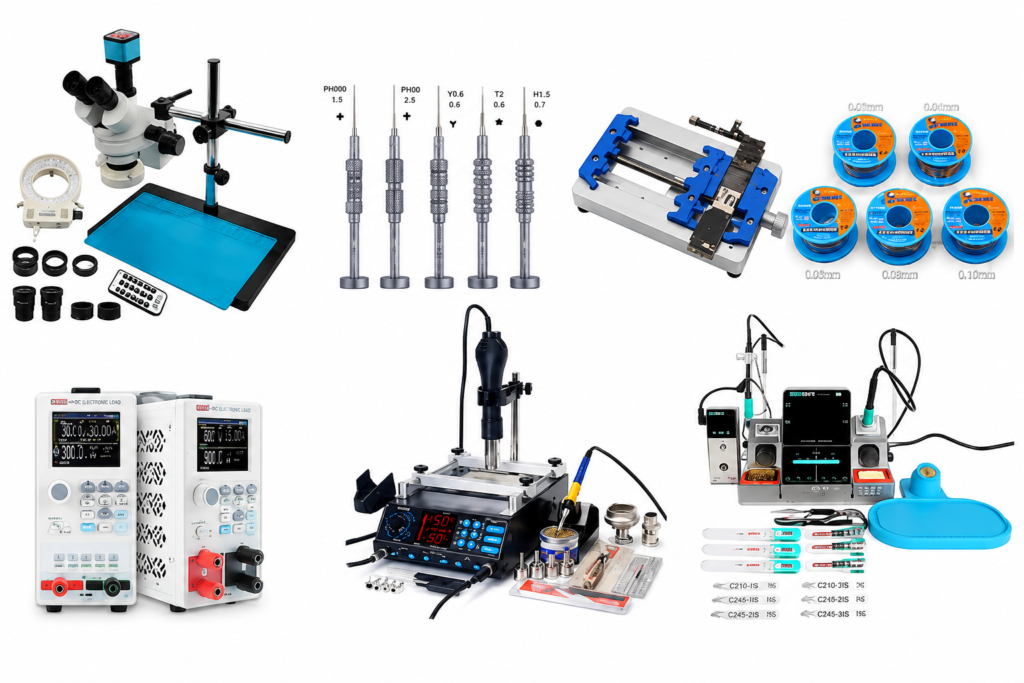
A professional repair shop commonly includes:
- Precision Screwdriver Kit
- Plastic Opening Tools
- Tweezers
- Magnetic Repair Mat
- Hot Air Rework Station
- Temperature-Controlled Soldering Station
- Digital Multimeter
- DC Power Supply
- Stereo Microscope
- Display Tester
- ESD Protection Kit
Professional equipment improves repair quality and helps technicians work more efficiently.
Choosing the Right Shop Location
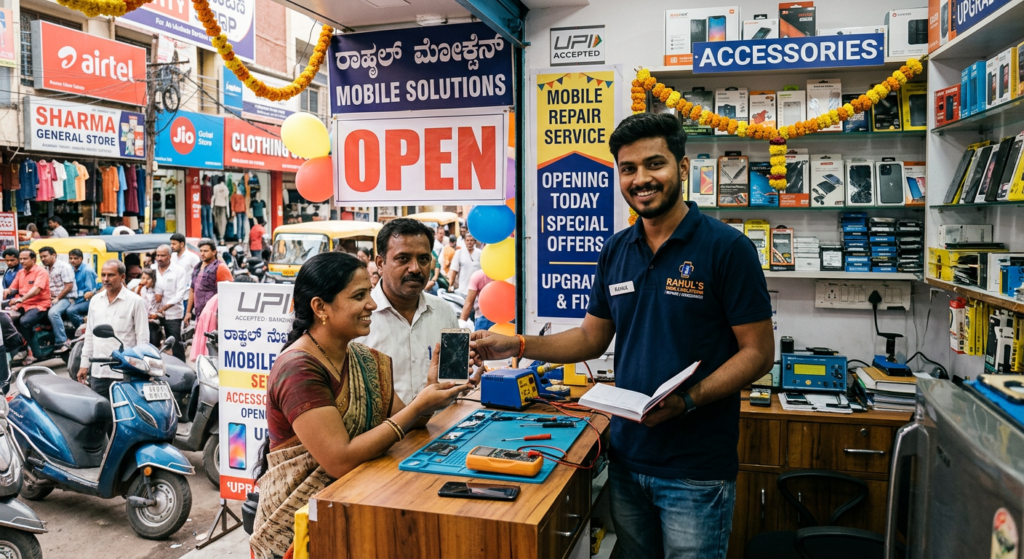
Location influences customer footfall and business visibility.
Before selecting a location, consider:
- Nearby mobile markets
- Residential population
- Parking availability
- Public transport access
- Local competition
- Shop visibility
A convenient location can improve customer enquiries.
Skills That Increase Business Success
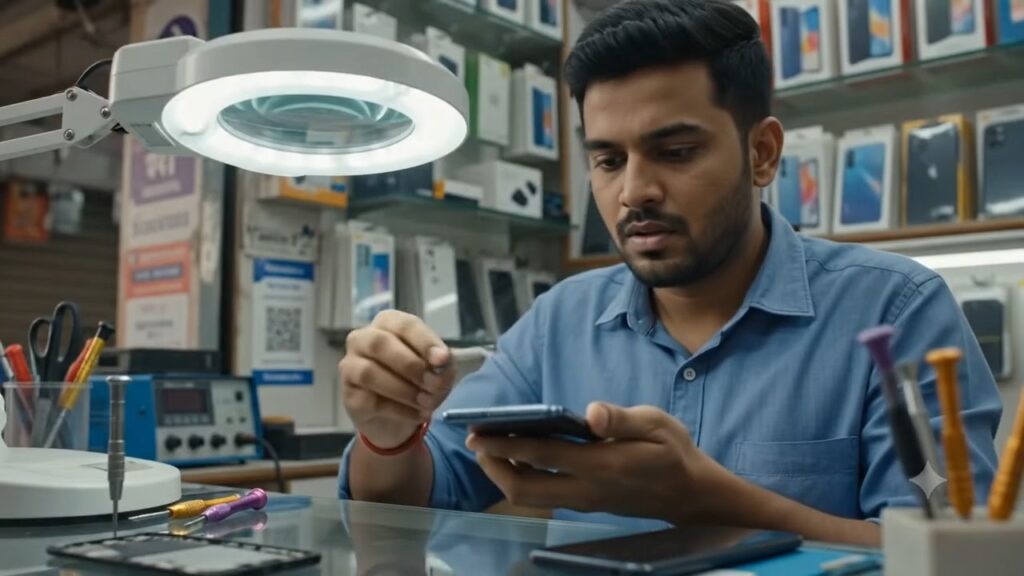
Technical knowledge alone is not enough.
Successful business owners also develop:
- Customer communication
- Diagnostic skills
- Inventory management
- Time management
- Pricing strategies
- Digital marketing
- Online reputation management
Combining technical expertise with business skills supports long-term growth.
Common Mistakes New Shop Owners Make
Many beginners make avoidable mistakes.
These include:
- Buying expensive machines before learning repairs
- Ignoring practical training
- Choosing poor-quality tools
- Overstocking spare parts
- Underestimating marketing
- Ignoring customer service
Planning carefully can help reduce unnecessary expenses.
How to Reduce Your Initial Investment
You do not always need to invest heavily at the beginning.
Some practical strategies include:
- Start with essential repair tools
- Focus on common smartphone repairs
- Upgrade equipment gradually
- Invest in practical training first
- Build repeat customers through quality service
- Expand services as experience grows
This phased approach helps manage costs while building confidence.
Future Growth Opportunities
As your business develops, you can expand into:
- Mobile Display Repair
- iPhone Repair
- OLED & AMOLED Display Repair
- Edge Glass Repair
- COF IC Repair
- Display Line Repair
- Fold & Flip Display Repair
- Smartphone Refurbishment
- Accessory Sales
Offering additional services can diversify your revenue streams.
Why Choose Screen Fixer Institute?
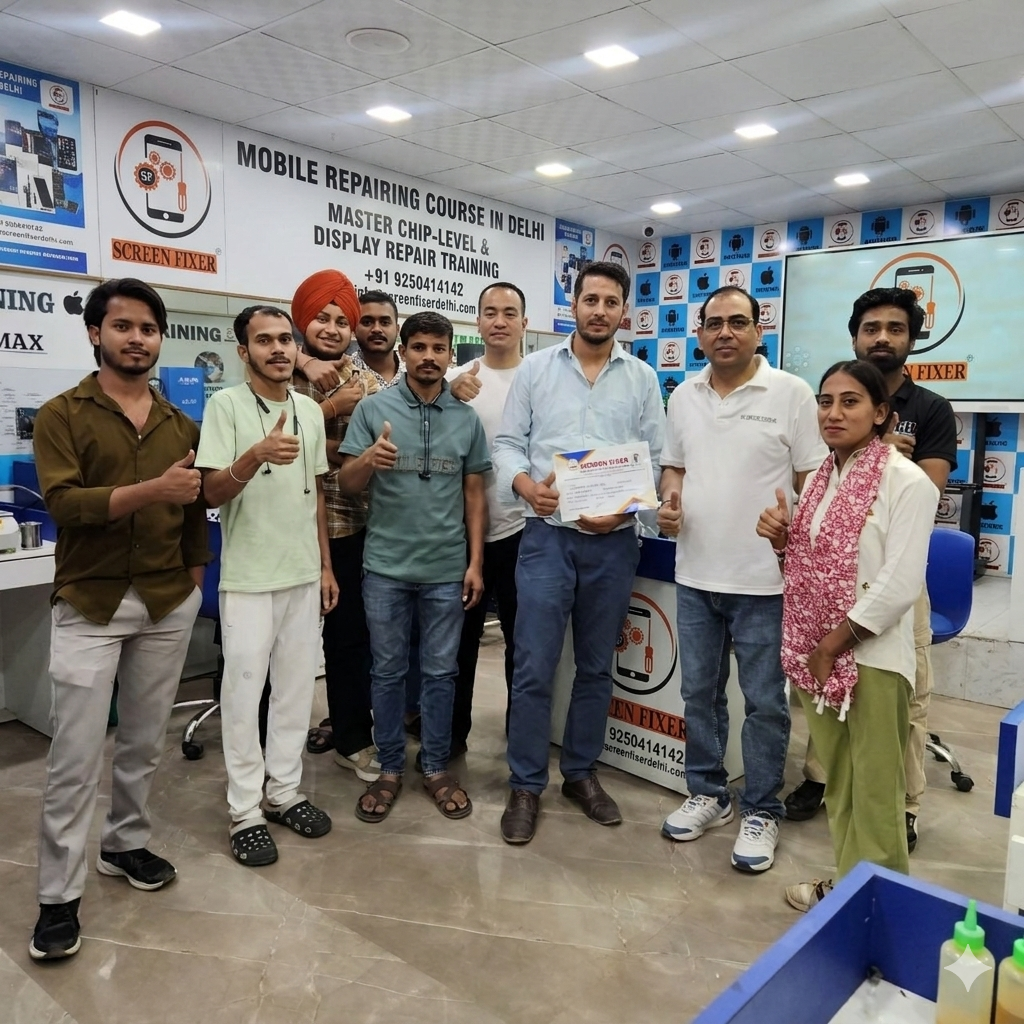
At Screen Fixer Institute, students receive practical training designed to prepare them for careers in mobile repairing and entrepreneurship.
Our Training Includes
- 100% Practical Training
- Live Mobile Repair Practice
- Android & iPhone Repair
- Mobile Display Repair
- Edge Glass Repair
- COF IC Training
- Display Line Repair
- Fold & Flip Display Training
- Modern Repair Laboratory
- Industry-Experienced Trainers
- Course Completion Certificate
- Lifetime Technical Support
Students gain hands-on experience with professional tools while learning current repair techniques.
Suggested Articles Links
Read more related articles:
Courses
- Mobile Repairing Course
- Mobile Repairing Course Institute
- Best Mobile Repairing Institute in India
- Certified Mobile Repairing Institute
Business Guides
- Mobile Repairing Business Guide
- How to Start a Mobile Repair Shop
- Mobile Repair Shop Setup Cost
- Mobile Repair Shop Equipment List
- Best Mobile Repair Tools
- Mobile Repair Technician Career
- Mobile Phone Repair Technician Salary in India
Course Information
- Mobile Repairing Course Duration
- Mobile Repairing Course Fees in Delhi
- Mobile Repair Training for Beginners
- Mobile Repairing Course After 12th
- Mobile Repairing Course with Placement
Advanced Training
- Mobile Display Repairing Course
- iPhone Display Repairing Course
- Edge Glass Display Repairing Course
- COF IC Training
- Display Line Repair Training
- Fold & Flip Display Training
Trusted Industry Resources
To stay updated with smartphone technologies, you can also explore these trusted resources:
- Apple Support – https://support.apple.com/
- Android Developers – https://developer.android.com/
- iFixit Repair Guides – https://www.ifixit.com/
These references provide additional information and improve content trustworthiness.
Frequently Asked Questions
How much investment is needed to start a mobile repair business?
The required investment depends on factors such as shop size, location, equipment, inventory, and the range of services you plan to offer. Many entrepreneurs start with essential tools and expand gradually.
Can I start from home?
Yes. Some technicians begin by offering repair services from a home workshop before moving to a commercial location, subject to local regulations and customer requirements.
Which equipment should I buy first?
Start with precision tools, a quality soldering station, a hot air rework station, a digital multimeter, and ESD protection. Advanced machines can be added later as your business grows.
Is professional training necessary?
Practical training helps technicians understand repair techniques, safety procedures, and efficient fault diagnosis, reducing costly mistakes.
Can I expand my business later?
Yes. Many repair shops gradually add advanced services such as display repair, motherboard repair, smartphone refurbishment, and accessory sales.
Start Your Mobile Repair Career with Screen Fixer Institute
Whether your goal is to become a professional technician or launch your own repair business, quality training can help you build a strong foundation.
Why Students Choose Screen Fixer Institute
✅ 100% Practical Training
✅ Android & iPhone Repair
✅ Mobile Display Repair
✅ Edge Glass Repair
✅ COF IC Training
✅ Display Line Repair
✅ Fold & Flip Display Training
✅ Industry-Experienced Trainers
✅ Modern Repair Laboratory
✅ Course Completion Certificate
✅ Lifetime Technical Support
📞 Call / WhatsApp
+91 9250414142
🌐 Website
📍 Address
RZD-70, 2nd Floor, Mahavir Enclave Main, Palam Dabri Road, Above ICICI Bank, Near Dashrath Puri Metro Station, New Delhi – 110045
Conclusion
Planning your Mobile Repair Business Investment carefully is the first step toward building a sustainable business. Rather than focusing only on the total amount you need to spend, prioritise practical training, quality equipment, and a gradual expansion strategy. By combining technical expertise with good customer service and smart business planning, you can create a repair business that adapts to changing technology and customer needs.