
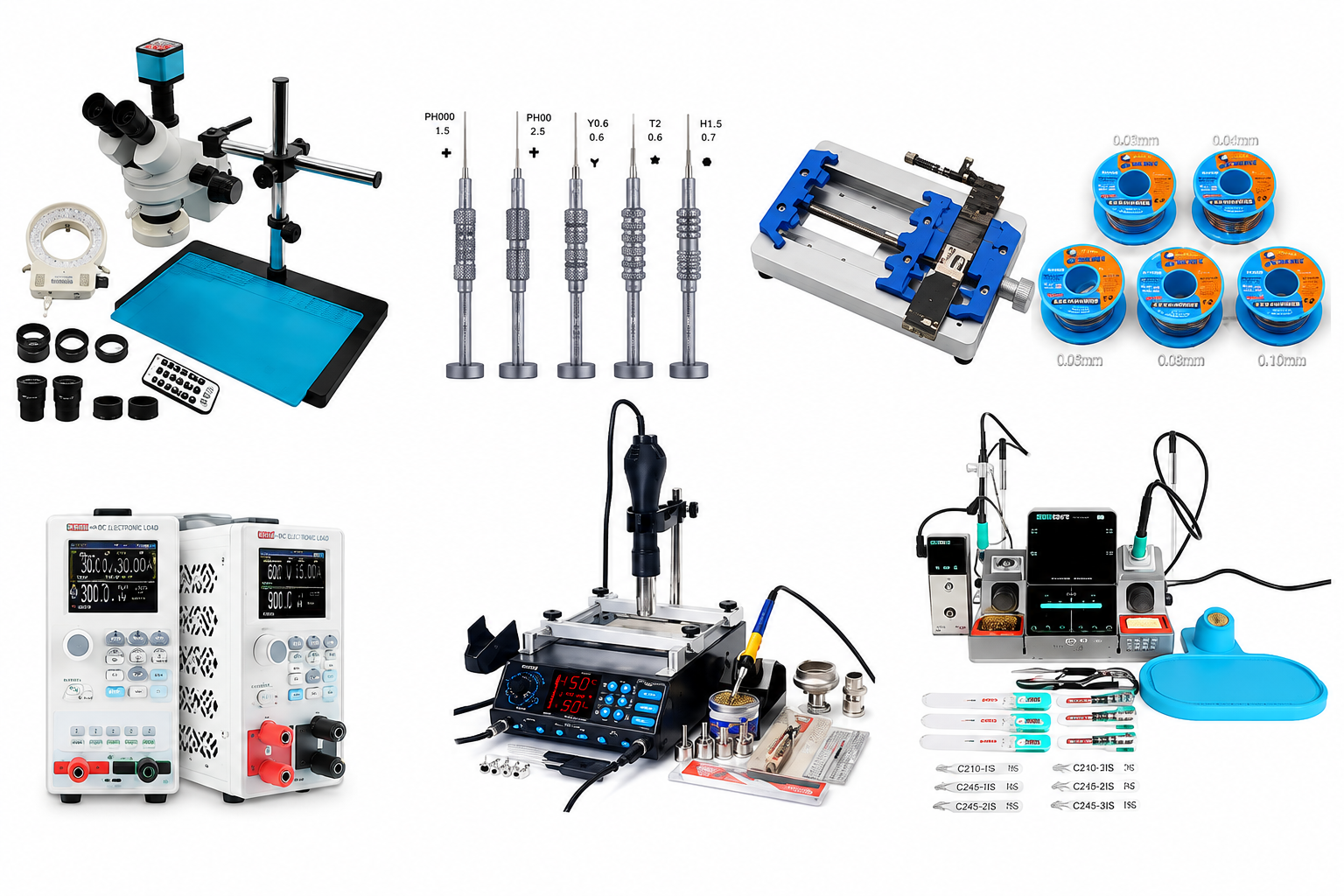
A successful mobile repair shop begins with the right equipment, not necessarily the most expensive equipment. Whether you’re opening your first repair counter or expanding into advanced display and motherboard repairs, choosing the correct tools improves repair quality, efficiency, and customer confidence.
This Mobile Repair Shop Equipment List covers everything from basic hand tools to advanced display repair machines, helping beginners and professional technicians build a practical workstation.
- Why Choosing the Right Equipment Matters
- Essential Hand Tools
- ESD Tweezers
- Plastic Pry Tools
- SIM Eject Tool
- Magnetic Screw Mat
- Anti-Static Brush
- Professional Testing Equipment
- DC Power Supply
- USB Power Meter
- Soldering & Rework Equipment
- Soldering Station
- Hot Air Rework Station
- Flux & Solder Wire
- Desoldering Wick
- Microscope & Inspection Tools
- Mobile Display Repair Equipment
- Display Testing Machine
- Display Separator
- OCA Laminating Machine
- Bubble Remover
- Edge Glass Repair Machines
- COF IC & Flex Bonding Equipment
- Workbench Setup
- ESD Safety Equipment
- Cleaning & Consumables
- Spare Parts Storage Solutions
- Computer & Software Requirements
- Budget Equipment for Beginners
- Advanced Equipment for Professional Shops
- Equipment Maintenance Tips
- Suggested Articles Links
- Recommended Resources
- Why Choose Screen Fixer Institute?
- Frequently Asked Questions
- Conclusion
Why Choosing the Right Equipment Matters
Many beginners believe buying expensive machines automatically creates a professional repair business.
In reality, successful technicians first develop skills, then purchase equipment based on customer demand.
A good equipment setup should help you:
- Diagnose faults accurately
- Repair devices safely
- Improve work speed
- Reduce repeat repairs
- Organize your workspace
- Deliver consistent quality
Essential Hand Tools
Every mobile repair technician needs a reliable collection of precision hand tools.
Precision Screwdriver
Set Essential for opening different smartphone models.

ESD Tweezers
Safe handling of delicate electronic components.

Plastic Pry Tools
Open devices without damaging frames or displays.

SIM Eject Tool
Useful for almost every smartphone model.

Magnetic Screw Mat
Keeps tiny screws organized during repairs.

Anti-Static Brush
Safe cleaning of PCBs and connectors.

These tools are inexpensive but used daily.
Quality matters more than quantity.
Professional Testing Equipment
Before replacing components, technicians should diagnose the actual fault.
Digital Mustimeter

Used for checking voltage, continuity, resistance, and basic electrical diagnosis.
DC Power Supply

Helps analyze power consumption and identify short-circuit behavior during diagnostics.
USB Power Meter

Useful for observing charging current and basic charging analysis.
Testing equipment helps technicians diagnose problems before changing parts unnecessarily.
Soldering & Rework Equipment
Component-level repair requires reliable soldering tools.

Soldering Station
Used for connectors, components, and PCB repairs.

Hot Air Rework Station
Useful for IC and component removal.

Flux & Solder Wire
Important consumables for clean solder joints.

Desoldering Wick
Helps remove excess solder safely.
Always use appropriate temperature settings and quality consumables.
Microscope & Inspection Tools
Modern smartphones contain extremely small components.
A microscope improves precision during diagnosis and repair.

A professional inspection setup may include:
- Trinocular microscope
- LED microscope lighting
- PCB holder
- Inspection camera (optional)
This becomes especially valuable for motherboard and track repair.
Mobile Display Repair Equipment
Display repair has become one of the fastest-growing specializations.
Depending on your services, equipment may include:

Display Testing Machine
Verify screens before installation.

Display Separator
Used during display refurbishment.

OCA Laminating Machine
For glass refurbishment workflows.

Bubble Remover
Helps improve laminated display quality.
These machines are typically purchased after gaining display repair training.
Edge Glass Repair Machines
If your business specializes in Edge Glass Repair, additional machines may be required.
Examples include:
- Curved display separator
- OCA laminator
- Bubble remover
- Glass alignment tools
- Heating platform
Invest in these only if there is genuine customer demand.
COF IC & Flex Bonding Equipment
Advanced display technicians may eventually work with specialized equipment for:
- COF IC work
- Flex Bonding
- Display Line Repair
These repairs require professional training and should not be attempted without proper practical experience.
Workbench Setup
A functional workstation is more important than decorative furniture.
Recommended Layout
A practical repair bench should include:
| Area | Purpose |
|---|---|
| Microscope | PCB inspection |
| Soldering Zone | Component repair |
| Hot Air Zone | IC work |
| Repair Mat | Device disassembly |
| Tool Drawer | Hand tools |
| Spare Parts Shelf | Organized inventory |
Good organization improves repair speed.
ESD Safety Equipment
Protect sensitive electronic components with:
- ESD mat
- ESD wrist strap
- Anti-static tweezers
- Grounded workstation
- ESD storage bags
Safety is essential for professional repairs.
Cleaning & Consumables
Every shop should maintain cleaning supplies.
Essential items include:
- Isopropyl alcohol (appropriate grade)
- Cleaning cloth
- Cotton swabs
- Flux cleaner
- Anti-static brush
- Adhesive remover
- Kapton tape
Clean repairs create better customer satisfaction.
Spare Parts Storage Solutions
Use labeled storage for:
- Displays
- Batteries
- Cameras
- Speakers
- Charging connectors
- Flex cables
- IC components
- Screws
Avoid mixing different models together.
Inventory management directly affects business profitability.
Computer & Software Requirements
A repair shop should also have a basic computer for:
- Customer billing
- Job sheet management
- Inventory
- Business records
- GST invoices (if applicable)
- Online customer enquiries
Digital organization saves time.
Budget Equipment for Beginners
If you’re starting with limited investment, prioritize essentials.
| Priority | Equipment |
|---|---|
| ⭐⭐⭐ | Screwdriver Set |
| ⭐⭐⭐ | Tweezers |
| ⭐⭐⭐ | Multimeter |
| ⭐⭐⭐ | DC Power Supply |
| ⭐⭐⭐ | Soldering Station |
| ⭐⭐ | Hot Air Station |
| ⭐⭐ | Microscope |
| ⭐ | Display Machines |
Start small and upgrade gradually.
Advanced Equipment for Professional Shops
As your business grows, consider specialized equipment for:
- Edge Glass Repair
- Flex Bonding
- COF IC
- Display Line Repair
- Fold & Flip Displays
- OLED refurbishment
Only invest after proper training.
Equipment Maintenance Tips
Maintain your tools regularly.
Daily
- Clean workbench
- Organize tools
- Check soldering tip
- Remove dust
Weekly
- Inspect microscope
- Calibrate multimeter
- Clean hot air station
- Check cables
Monthly
- Inventory audit
- Tool replacement
- Equipment servicing
- Safety inspection
Preventive maintenance increases equipment life.
Suggested Articles Links
Read more related articles:
- Best Mobile Repair Tools
- Mobile Repair Business Guide
- Mobile Repair Shop Setup Cost
- Mobile Repair Business Investment
- Mobile Repair Shop Interior Ideas
- Mobile Repair Business Profit
- Mobile Display Repairing Course
- Edge Glass Repair Course
- Track Repair Training
- COF IC Training
- Fold & Flip Display Training
Recommended Resources
- Skill India Digital — Vocational skill development information
- GST Portal — Business registration guidance
- Google Business Profile — Local business visibility
- Startup India — Small business resources
Why Choose Screen Fixer Institute?
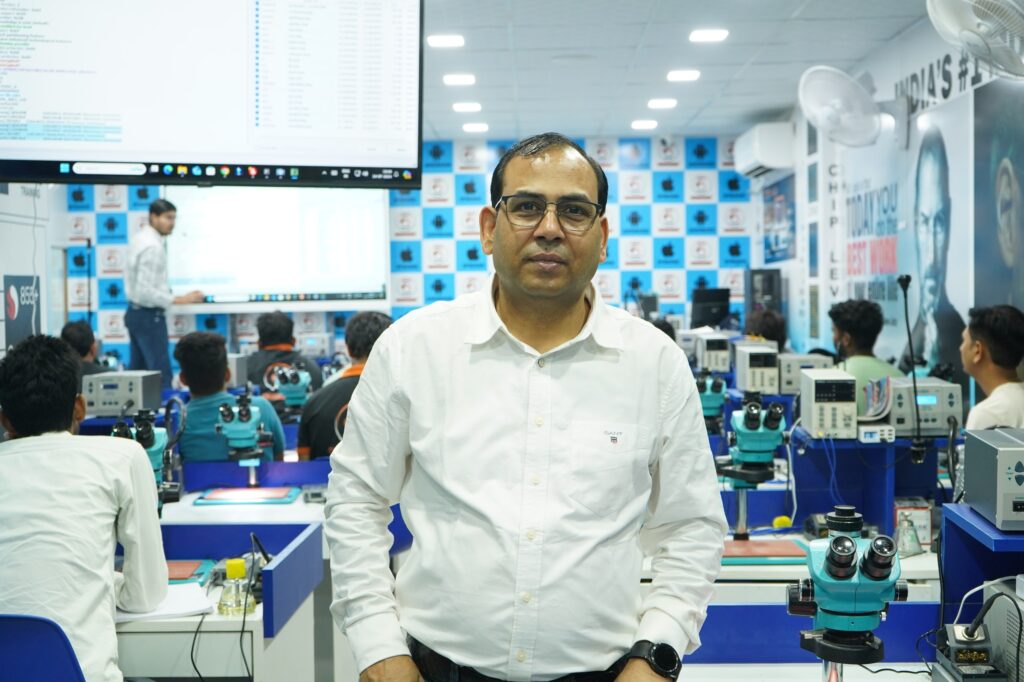
Become a professional mobile repair technician with practical training.
Courses We Offer
- Android & iPhone Repair
- Mobile Hardware Repair
- Mobile Display Repair
- Edge Glass Repair
- Flex Bonding
- Track Repair
- COF IC Training
- Display Line Repair
- Fold & Flip Display Training
Why Students Choose Us
- 100% Practical Training
- Industry Experienced Trainers
- Professional Repair Lab
- Course Completion Certificate
- Lifetime Technical Support
📞 Call/WhatsApp: +91 9250414142
🌐 Website: https://screenfixerdelhi.com
Frequently Asked Questions
Which equipment is essential for a beginner mobile repair shop?
A screwdriver set, tweezers, multimeter, DC power supply, soldering station, hot air station, and a clean workbench are the most important starting tools.
Do I need a microscope?
Yes, especially if you plan to perform motherboard or component-level repairs.
Which machine is used for display repair?
Common equipment includes display testing machines, separators, laminators, and bubble removers depending on the repair process.
Should I buy advanced machines immediately?
No. Purchase specialized equipment only after gaining practical training and understanding customer demand.
How much does mobile repair equipment cost?
The investment varies according to your services, equipment quality, and business size. Start with essential tools and expand gradually.
Conclusion
The Mobile Repair Shop Equipment List is not about buying every machine available. It’s about selecting the right tools that match your skills and business goals.
Begin with essential diagnostic and soldering equipment. Organize your workspace professionally. Develop practical skills through proper training, and then expand into advanced display and motherboard repairs as your business grows.
A well-equipped repair shop combined with quality workmanship creates long-term customer trust and sustainable business growth.